Skip to content
Formerly, HistoryMiami Museum

I remember vividly the days that led to my coming to Miami from Cuba. I was only 9 years old and turmoil, to say the least, was at hand. We were leaving my country for a short period of time. No one in my family thought it was forever. But even as a goodbye, it felt very sad.

My mother told me we would be staying in Miami for a long vacation, but I knew better. I overheard a conversation between my mother and father. They were afraid that Fidel Castro was installing a communist regime and that they would lose custody of the children to the state and the ability for us to practice our faith.

At that time, I couldn’t understand how they would make the ultimate sacrifice of leaving everything behind for my little brother and me. My father, who was in his 30s, already had a very successful job and future in an American company, and was finishing his studies at La Universidad de La Habana as an electrical engineer. My mother had a doctorate in philosophy, also from the same university. She was working as a teacher.

In those days, they seized all American businesses, and Mr. Skilton, my dad’s boss, and his family were expelled from the country. It was very sad for me. In their home, I had learned many American values and, because of the Skiltons, I celebrated Halloween and Thanksgiving. The regime asked my dad to help in the take-over of this business. My dad replied he wasn’t a thief. He had to leave the country before us.

On November 6, 1960, my mom, my 4-year-old brother Freddie, and I left Cuba for Miami. They put us in the “fish bowl,” a glass room where you stayed for hours, fearing your name would be called to be searched. From my seat, through the glass, I could see my grandparents trying to hold their tears so that we would not see them cry. What I didn’t know at that moment is that I would never see my paternal grandparents again. Still today, that sad memory touches my heart when I’m sitting in any enclosed glass room. I held my mother’s hand as the Pan American flight left Havana late that afternoon. People were crying; others feared the plane would go back to Cuba and screamed to the pilot not to return. You could hear the sobbing throughout the hour that the flight lasted.

The Miami International Airport was in the same place as it is today, but back then it was a small building with a terrace. We all came down the ladder and some kissed the ground. Before we went into U.S. Customs, in a moment of emotion, we sang the Cuban National Anthem. Then I saw my dad on the terrace waving at me, and I knew at that moment, that Cuba will always be in my soul but that Miami was home.

A few days later, I started school at Kensington Park Elementary. I knew very little English. My classmates were so friendly, but I only had one friend who could communicate with me, a Cuban boy named Ricky. We were the only two Cubans in the class. Children learn fast, and weeks later, I could say the words to “America the Beautiful” and the Pledge of Allegiance.

Every Saturday, at 8 in the morning, I had religious education classes at Sts. Peter and Paul Catholic Church. It was too early for me, but my father would make me go, regardless of my protests. After all, that was one of the main reasons we had left Cuba — so that we could practice our faith in freedom.

Soon, all my friends and their parents started arriving from Cuba. We lived in the northwest section of Miami, near the dog track. We went almost every day to the airport to give support to those in our same situation who were just arriving. Everyone was family and we helped each other.

Christmas was an emotional time. The year before, I had received so many gifts – twice — some from Santa Claus and others for Three Kings Day. But most important, my grandparents were there. This year, my young parents were alone and could not afford too much since my dad did not have a job. Days before Christmas, we received an invitation for a Christmas party for Cuban children at the Gesu Church in downtown. Included was a card for a special gift, and I still remember how nice it felt, and the excitement of a child who had nothing. It also meant a lot to my parents.

On Sundays, were outings to Miami Beach, Lincoln Road and the parks, and we would take picnics. Once, we tried to sneak into Parrot Jungle but were told you had to be 5 to go in free. So the picnic was outside.

Months later, we had to leave and go to Puerto Rico to find a job for my dad. In all the years we lived in Puerto Rico, we came to Miami every year. The Magic City is the place where most Cubans want to be – for friends and family, Cuban food and pastelitos. But the love of America, the generosity of its people, and the opportunities given to us, made us Cuban Americans.

More than 40 years ago, in 1971, a small restaurant called Versailles came to be. Every time we arrived from Puerto Rico, my dad would take us from the airport to Versailles. Later, when I moved back, my friends and I would always go after the parties for café con leche. I sat there with my husband, then my boyfriend, for long conversations. I pushed my babies’ carriages through the tables, and when my children were teenagers, I took them for lunch and advice. Today, Versailles is the first place to stop when they come from college or from a long trip. Versailles is part of our Cuban culture in Miami.

In the ‘70s, my parents bought an apartment in Key Biscayne, which we call El Cayo. It was the place where I met my husband. We married 35 years ago and have three children. Today, I live in the Grove, and see bikers every day riding the same trails I used to ride to Matheson Hammock. And still my Cuban-American soul finds Miami is my home.

I was born in Georgetown, Guyana, which is the only English-speaking country in South America.

When I was 6 years old, my parents migrated to Toronto. I started school in Canada, and it was my second-grade teacher who was influential in my love of education at an early age.

You see, I had an accent when I spoke English since I am from Guyana and I did not want the other kids to make fun of me. So I kept quiet because I was intimidated to engage with other students and felt out of place.

My teacher spoke to my parents and let them know that unless I got with the program I was going to be left behind and I was going to repeat the school year. So she suggested that I attend summer school to improve my deficiencies. To this day, I am thankful to this teacher from Jamaica who was able to see through my shyness and understand what I was going through.

Memories like those have also helped me become the person I am today. I remember that my love for police work came from that tall police officer who visited my third-grade classroom for career day. His uniform and command presence stood out the most and left a visual imprint.

I also had a little more push since we lived close to the police academy and every day when I got home from school, I would see the recruits exercising and practicing. I knew that when I grew up I wanted to be a police officer who would be able to help others.

In 1985, I came to Miami with my family, and it was here that I started my public service career. One year after graduating from Miami Southridge Senior High School, I enlisted in the U.S. Army and spent three years as an infantry soldier. I then was hired by the State of Florida as a correctional officer at South Florida Reception Center and I was subsequently hired by Miami-Dade Schools Police Department as a police officer.

Education has always been an emphasis in my life, and I graduated from Florida International University with a bachelor’s of science and from the University of Cincinnati with a master’s of science. I am also a graduate of the prestigious University of Louisville, Southern Police Institute Command Officers Development Course.

I have been blessed to be able to work and train with multiple agencies responding to critical incidents and have offered countless workshops in the area on youth violence, gang awareness, school safety, weapons of mass destruction, emergency management and tactical training. I also teach for the University of Phoenix and FIU.

Fifteen years ago, I worked with Miami-Dade Schools Police. I was working there in the position of captain when the City of Miami Police Department offered me a position as police major to lead and manage the Miami Police College and certainly this was something I could not refuse. I saw this as an opportunity to grow and learn.

Then I saw the chance of rejoining the Miami-Dade Schools Police Department as the chief. I felt that this was an opportunity I could not pass up and also would finalize my law enforcement career and personal mission. I was working for City of Miami Police Department when Superintendent Alberto M. Carvalho offered me a chance to lead the police department for the fourth-largest educational district in the United States.

The Miami-Dade Schools Police Department is currently the seventh-largest law enforcement agency in Miami-Dade County with an authorized strength of 180 sworn personnel. One of the main objectives of the department is to provide a safe learning environment that promotes good health and is free from violence, weapons, hazards, vandalism and substance abuse.

The Miami-Dade Schools Police Department not only deals with incidents of a criminal nature, but the officers strive to be positive role models for the students and prove there is an alternative to crime or violence. The officers play an active role in the prevention of crime on our campuses.

After Hurricane Andrew, I ended up in Broward County with my wife and son. All these years I have been working in law enforcement, my wife has been the rock that has held our family together. She has made sure that my son was properly prepared for school along with participating in social and sporting activities.

My son just recently graduated from FIU with a bachelor’s in public administration and he has chosen to pursue the career as a law enforcement officer. This is a noble calling since it takes a special person to take on these responsibilities in today’s society.

When I left Guyana with my parents and sister, I never imagined I would be where I am today. My parents had the strength to migrate from not just one country but two countries. The opportunity to swear in those new officers made me realize how lucky my family and I are.

We are lucky to live, work, and recreate in a beautiful city with people from many different cultures, which makes me realize that our differences can be the glue that holds us together.

This endeavor to help others has led me to more than 24 years of public service at the federal, state, municipal and county government levels. I can truly tell everyone that great things are made in America, and this is definitely the land of opportunity. For if it was not for the emphasis on education and good family values, I could not be where I am today.

My parents sold their business in Washington, D.C. in 1951 and we came to Miami Beach for vacation. After a few weeks, they informed me they were not going back and this would be our new home.

My dad bought a dry-cleaning/tailor shop on 15th Street off Washington Avenue, one block from a dreary street named Española Way, which is now a busy center of activity. I enrolled in the University of Miami where the tuition was $500 a year.

I got to UM by riding three buses: Miami Beach to downtown Miami behind Burdines; then Miami bus to the old Gables bus terminal; and finally Gables terminal to the university. Many classes were held on the old campus in a drab building with wooden floors and others were on the main campus, held in former army barracks called the “shacks.”

Attendance at UM football games at the Orange Bowl was a popular weekend event, as were shows at the Ring Theatre. I still have the programs from shows during my days there, including the one where Jerry Herman played a nymph. Fraternities had a yearly show competition but after Jerry Herman’s frat won so many times, they combined and presented a big show in Dade County Auditorium, written byHerman.

I had a part-time job at Lee’s Health Bar, located on Collins Avenue, next door to Wolfie’s. It was known for exotic fruit drinks and ice cream creations.

Social life was good because we were so close to the beach. Everyone met at the 15th Street beach on weekends and also at dances at Temple Emanu-El.

Hoffman’s Cafeteria on Collins Avenue was a meeting place for the senior citizens. My parents became involved in the community and joined a Jewish center, which had a building on Fifth Street. My dad became an “actor” there and participated in many shows. He also joined a group of musicians and singers who met on the grassy area in front of the beach.

We bought a house and moved to the Shenandoah area in the city of Miami. The memories of that location bring to mind Studio M, a small theater; the Miracle Theatre in Coral Gables; J. Baldi’s Hair Salon, where we waited for appointments; shopping on Miracle Mile and eating at Cookies. Tyler’s in Miami Springs had the best cream pies and special occasions were celebrated at King Arthur’s Court, also in Miami Springs, or The Country Store in Coconut Grove. We shopped downtown at Burdines with a lunch treat at their tea room.

After graduating from the university, I got a job teaching in Coconut Grove Elementary, where the principal was Oliver Hoover. The Grove was a small, quaint area with the bank and drugstore across from the school. Midway through the year, my students and I were moved to a newly built school off Red Road and we voted to name it after a Miami pioneer, David Fairchild, and our principal was Rod Nowakowski.

I got married in 1956 and took a year off from teaching to get my master’s degree at the university. I worked in the Merrick Building tower, setting up a curriculum library for School of Education students. We rented an apartment and lived a block from the Coliseum in Coral Gables which, over the years, became an ice skating rink, a bowling alley, and now the site of an apartment complex and Publix supermarket.

My husband, an architect, worked on many of the Miami Beach hotels, and his office was on Lincoln Road. We attended openings at the Algiers, Carillon, the Deauville, DiLido and others.

In 1960, we moved to North Miami where my three children grew up. Special treats for them were appearing on the children’s TV shows, Skipper Chuck and Banjo Billy. Many birthday parties were held at Crandon Park, with the train ride and a visit to the zoo. When they got older, they learned to drive in the big empty parking lot at Levitz furniture store. My children, now in their 40s and 50s, were all born in Miami. They live in Boston, North Carolina and California.

Our next move was to East Kendall, now called Pinecrest. Miami has always been a great place to live, except on Aug. 24, 1992, when Hurricane Andrew came to visit.

We had been through a number of minor storms but this was “the big one.” Homes all around us were destroyed, schools were closed, and there was no water (we had a well, but no electricity to make the pump work so we bathed outdoors with the neighbor’s garden hose).

The Miami Herald ran notices with missing persons’ names, places to bring pets, a department store listing the zip codes of the residences that could hold off paying bills without accruing interest, and banks that were open, even on Saturday and Sunday. There were special places you could cash checks, and big businesses asked employees to call and say they were OK and were offering food, lodging and help. All traffic lights were out and citizens stood at busy intersections directing traffic. The biggest shock was driving five miles north of my home and everything was normal with no sign of how the people in the southern end of town were suffering.

After 35 years of teaching, I retired in 1996. My next venture was as a docent at the Lowe Art Museum and I also joined IRP (Institute for Retired People) to explore new classes.

IRP has evolved into the Osher Lifelong Learning Institute, under the auspices of the University of Miami School of Continuing Education. Hundreds of seniors attend wonderful classes that are devoted to keeping us young, smart and having fun.

One sunny, mid-week afternoon, I arrived at home to family cars parked in the front yard. I did not have to dig for the house key in my bookbag. My father stood in front of the door as if shielding me from something.

As I entered the house, I heard a woman crying. Family members surrounded the crying woman whom I soon realized was my mother. It was the first time I saw her cry as a result of something I didn’t do. I did not have a broken arm or a D on my report card. On that afternoon, my mother had lost her father.

After I kissed her and said nothing, I went to my room and watched MTV when videos were all the rage. I did not understand what had happened. Death was one of those things I heard tossed around in other people’s conversations. I identified death with Friday the 13th movies and drug dealers on the news.

My whole life I had taken pride in the fact that all of my grandparents were alive and well. I wore that on my sleeve and carried it around as if I had won a trophy. Abuelo was not sitting in a Cuban jail cell, waiting in a ration line, and eating other people’s household pets. Abuelo was in Miami, living in a condo, shopping at Publix and eating steak. Now, Abuelo was suddenly gone, from complications related to diabetes, and there was nothing doctors, my family or I could do about it. Life threw us this curve ball and we had to catch it.

It was my first funeral and the only thing I looked forward to was to practice making my own tie. When I arrived at the funeral home, everyone was already there. The place smelled of cigarette smoke and Cuban coffee. Strangers offered their condolences, hugs and spearmint gum. All I could do was smile and walk away.

As I went toward the room, my grandmother sat crying in a chair next to the casket. Beautiful flowers were scattered near her. The reds, whites, yellows, and greens clashed with her black dress. She was surrounded by more strangers with some hovering over her like more of those loser contestants. The rest of them stood in line waiting their turn to comfort her. I thought all the faces were probably the same to her. Her hands always touched their elbows and her tissue almost always fell on the floor.

I went up to my grandmother, kissed her cheek and walked away through the lobby, the glass doors, the parking lot, and into a cafeteria. As I ordered a pastelito and Materva, I saw some of the strangers from the funeral. They didn’t seem so strange anymore. Their faces and voices sounded familiar. The talk of old Cuba, the exile community, Miami, Hialeah, and my family comforted me. Those were things I had heard before and things my Abuelo used to say.

After spending the night at the funeral home, I woke to find the world still around me. Everyone was still talking and whispering comforts in the air like shooting the breeze over a game of dominos. No one slept. They probably feared they would miss out on one of my grandmother’s wails or so-and-so’s daughter or son and how they are still not married.

At that moment, the priest called everyone to pray the rosary. When the prayer was over, I walked outside with my parents, grandmother and brother to look for the limo. In the corner of the parking lot, the limo rested beneath the shade of one of those trees filled with moon-shaped green seeds. I remembered having block fights with those same seeds and that after one of the fights, I walked back home to find my grandparents waiting in the driveway with packages in their arms and smiles on their faces.

Abuelo said in broken English, “Who’s going to pick up the seeds?”

After the priest did what priests do and said what priests say, the cemetery workers rolled Abuelo’s casket to the rear of the mausoleum. My family and I were walking on a back street with a chain-link fence dividing the mausoleum and some kind of factory. The unkempt hedges sheltered some litter scattered close to the fence. The workers opened the side of the building and I caught a glimpse of where Abuelo was going to be. It looked like dusty concrete shelves. Objects were scattered like the litter next to the chain-link fence. I comforted myself by thinking it was better than being buried in just another hole in the ground with other people’s loved ones walking all over him. At least Abuelo had chosen this place for himself.

That night, I found myself sleeping next to my grandmother. It was dark and I realized that I really did not want to be next to her. I started to cry because I knew this is where I had to sleep tonight. My grandmother woke up and as she wiped the tears off my face, she told me, “No lo puedo creer. El gordo no esta aqui.”

She couldn’t believe her fat man was not there with her. I felt guilty for sleeping in his spot and for reminding her that she would not sleep with Abuelo again. As she reassured me that everything was going to be fine, I reached over and touched her face. As the wind and rain howled outside the window, I rubbed her dry face, rolled over and went to sleep.
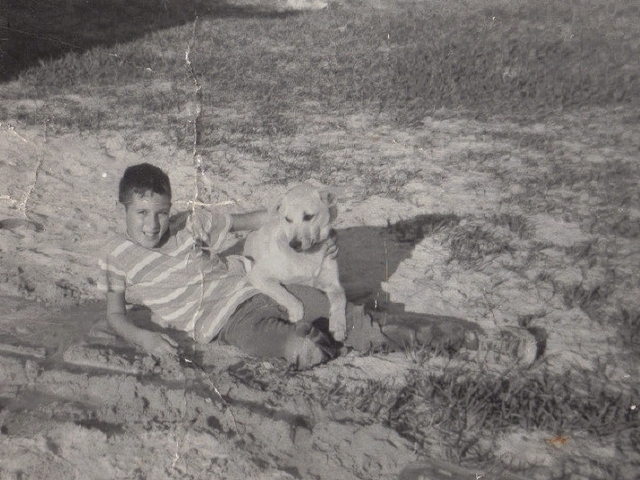
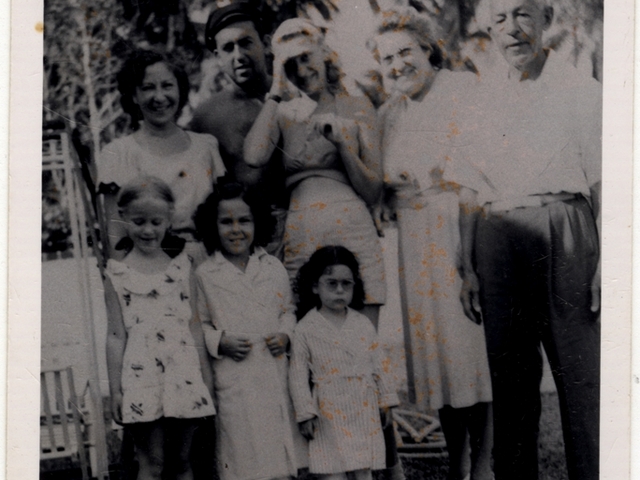
My name is Alex Sturman, and I am sharing with you a glimpse in the life that took place in the summer of 1957 when I was a nine year old in a family of six.

We were living in Charleston, S.C., where I was born. My father was a ‘travelling salesman’ at the time. He would pack up his company station wagon with restaurant supplies and take off for a week or two, covering most of South Carolina.

I’m sure that he was ready for a change when my uncle gave him a call to join him in Miami. My father decided to pack up the family and join his two brothers in business down in Miami.

The business was owning and operating lunch stands and trucks that serviced construction sites such as the Fontainebleau Hotel along Miami Beach. My Uncle Ben started the business a few years earlier and by 1957 he saw a chance to get his two brothers, Coleman and Nathan, to come down and work with him in beautiful Miami. The business was called Hadacal’s Mobile Canteen.

It was August 28th, 1957. My father, brother Philip and I packed up our 1953 Studebaker Champion Starliner, hooked on a U-Haul trailer and headed for Miami. My mother Ruth and sister Anita would join us once we got settled. My oldest brother Joey left for Miami a few months earlier and rented a house with our cousin Dave Hill. They were both nineteen at the time. Dave would later own the Taurus restaurant in Coconut Grove during its heyday in the ‘70s and ‘80s.

There was no I-95 back then. We drove all the way down using US1 and A1A. My father drove and Philip sat shotgun. I sat in the back with our two myna birds, Heckle and Jeckle. When we hit Hollywood, I kept sticking my head out the window looking for John Wayne. My father laughed. I didn’t know that this was a different Hollywood. We made it to Miami and pulled into the Chelsea Court Motel, made up of small cottages located on Biscayne Boulevard.

The car stopped, and once the dust settled I could see these shirtless, shoeless kids looking into the car window. They were my cousins Max, Annie Kay, Ina Rae and Martin. They were my Uncle Nathan’s kids that I was meeting for the first time. Max and I would later attend the University of Miami and become architects.

The next day my brother Joey had to run errands and asked if I would like to join him. He had a 1947 Hudson with an in-dash radio that was the size of a present day boom box. As he ran errands, I would sit in the car, windows down with the smell of horsehair padded seats and listen to the radio on a beautiful sunny day.

I remember the songs that played as I waited. They were “Honeycomb,” by Jimmie Rodgers, “Bye Bye Love,” by the Everly Brothers, and “Diana,” by Paul Anka. I was hearing these songs for the first time ever that day. To this day, whenever I hear any one of those songs, I am a nine year old back in that old Hudson, so excited about this new life in Miami that I am about to begin . . . and what a beautiful day.

Miami seemed so new back then. Everything was clean and freshly painted. It was as hot as it is today, but I never complained. The uniform of the day was shorts, sneakers and no shirt. No one wore shirts back then. The only air-conditioned buildings were the drug store and movie theater.

No such thing as graffiti and the only thing that kept an intruder out of your house as you slept was the latch on the screen door. There was no need to protect your property, because everyone respected each other and a break-in was unheard of. And as you slept, the oscillating fan kept you cool. It felt so good when the fan made its sweep and got back to you.

Trips to Miracle Mile and Lincoln Road were always family events. We would put on shirts, eat at the local cafeteria, and Mother would shop. I always remember the sky being sunny and bright as you looked through palm trees that were everywhere.

From Pogroms to Palm Trees: Rose Weiss, “The Mother of Miami Beach”

How does it feel to be the granddaughter of a Pioneer Family In a word—unique!

It would be a colossal understatement to say being born in Miami and growing up in Miami Beach has been spectacular, but how that all happened is the real story, and it all started with my grandmother, Rose Sayetta Weiss.

“Rosie,” as she was known, immigrated with her family to Brooklyn, New York, from the small village of Mizrich, on the Russian/Polish border. Jews there lived under the oppressive rule of the Czar, and going to America was every family’s dream.

The Sayettas settled in the East Side, and eventually Rosie married Jeremiah Weiss. They had three children: the oldest my Aunt Malvina Liebman Gutschmidt, an educator and author, My father, Milton Weiss, a lawyer and banker, and my Uncle and Godfather, Eugene Weiss, a podiatrist.

Rosie suffered from allergies and asthma and was advised by her doctor to move South. Luckily for me, she chose Miami Beach. In 1919, she arrived, and it’s safe to say the City was never the same.

I remember her as being formidable in stature as well as personality. She immediately became active in politics and attended every city council meeting for 40 years. The City Fathers called her the “eighth councilman.”

While raising her children and then directing her grandchildren, she managed to organize the first Red Cross, found the PTA in Beach schools, design and sew the Flag for the City of Miami Beach and raise five million dollars in War bonds, more than any other woman in the State.

I pity the person who ever tried to say no to my grandmother, and there weren’t many who did. During the Thanksgiving and Christmas Holidays, she convinced the local merchants to donate food and clothing for poor families.

She would take my cousin Wolf (who was 10 at the time) and make the deliveries in her four door green Chevrolet. On her car was the decal of a Rose, and the Police knew when they saw that rose, not to ever ticket her no matter where she parked. If only I still had that car and decal!!!!

I’m told that when my Father announced he would marry my Mother (Ceecee Alexander), Rosie was skeptical of the blonde bombshell as a future daughter-in-law, but after two grandchildren and lots of brisket dinners they became friends.

Grandma Rose loved to babysit my sister and me. Our outings included the Parrot Jungle, The Rare Bird Farm, Crandon Park Zoo, and Pigeon Park, which is now Bayside.

At home she made up endless stories about a fantasy town called “Catsville” and played Opera and classical music all the time. As a result, I became a music lover and a Mario Lanza groupie in the first grade!

Grandma Rose had strong opinions and was very protective of her family. She made it clear that she disapproved of women wearing trousers and smoking in public. When I went to Europe after graduating from Beach High, she cautioned me to have a good time, but not to talk to any strangers; I didn’t always take her advice.

Rosie was nicknamed “The Mother of Miami Beach.” Her friend Carl Fisher once said that it was his money but her spirit that built the city. She died at 88, and whoever said that one person can make a difference certainly knew my grandmother. Miami Beach continues to be my home and I’m proud that my family tree is a Palm.

My maternal great-grandfather’s brother, John Tatem Wofford, homesteaded in Hallandale in the late 1800s when it was still a part of Dade County. Early in the 20th Century, he and his family moved to the wilderness of what became Miami Beach to construct one of the Beach’s first hotels, the Wofford Beach Hotel, at 24th and Collins.

The Woffords were among the first to be buried in the Miami City Cemetery, resting near the Burdine family crypt.

About 1915, my paternal grandmother’s brother, Jacob Decker, and his wife, Addie Mae, moved into a home at 2353 NW 28th St., then known as the Allapattah Prairie. Uncle Jake died in 1971 and Aunt Mae lived there until the early 1980s, when she moved to Naples. Their house still stands. I was born into the Central Florida branch of my family, so I never visited Miami until my teenage years.

In my mind’s eye, I had painted a vision of Miami Beach as a tropical Disneyland, helped along by the intro to The Jackie Gleason Show. On my first trip up Collins Avenue, I was very surprised to discover supermarkets and even a McDonald’s existed there! Miami Beach’s late publicist Hank Meyer had done his job on me quite well.

On my first trip to Miami in 1976, I drove all night from Daytona to get here. I-95 at the time ended in Vero Beach, where you picked up U.S. 1. to the east or Florida’s Turnpike to the west.

I arrived in town about sun-up. That memory of driving into Miami Shores with the majestic Royal Palms lining Biscayne Boulevard is one I will never forget. Today as a Miami Shores resident, I relive that moment each time I drive south on Biscayne.

I arrived just in time to witness all of our growing pains. From the laid-back metropolis of the late 1970s, we came through riots, the Mariel boatlift, the Dadeland Mall Shootings and Hurricane Andrew.

That said, many wonderful things have happened along the way. The birth of the Miami Beach Art Deco District, Christo’s Surrounded Islands, Biscayne Boulevard MiMo and its surrounding neighborhoods, Midtown Miami and the Design District, Art Basel — and people living downtown again!

At 25, I bought my first home, a little cottage at 1011 NE 72nd St. The house was small, but I had a wonderful unobstructed view of Biscayne Bay and Miami Beach. I could sit on my front porch and watch the time and temperature change on Lincoln Road.

No one in 1984 was sure what would become of the East of Biscayne neighborhoods. Many thought I had made a terrible investment by buying there.

That same thought raced through my mind on August 23, 1992, with the prospect of being washed away by a 16-foot storm surge from Hurricane Andrew.

Our neighbors to the South took the hit that was originally predicted to come ashore in North Dade. That neighborhood today is known as the Bayside Historic District and I’m proud to have played a role in seeing it historically designated.

In the early ’90s, I moved to higher ground in Miami Shores.

In 1978, I started in banking as a teller at Chase Federal Savings and Loan Association in Surfside and moonlighted at Burdines on 163rd Street to make ends meet.

It’s hard to imagine today, but there was a time when banks actually had to pay people a higher salary if they would agree to work on Miami Beach. Jokingly called ‘Combat Pay,’ it was because the mostly elderly population of the Beach could be quite demanding at times.

My having grown up around many elderly people served me well. After a 10-year government career stint with Dade County, I joined Northern Trust Bank, where I’m proud to say I’ve been for the past 16 years.

Along the way, there have been many changes to Miami. Gone are The Miami News, shopping at Burdines, Jordan Marsh, J. Byron’s and Richards, the Orange Bowl and its parade, a meal at the S&S; Diner on Northeast Second Avenue when the Cavallaris family still owned it. They’ve all been replaced by new ‘rocks’ and institutions along the way.

And yes, those tall Coconut Palms are still my favorite trees and they surround my MiMo home in Miami Shores.

Miami isn’t for everyone. Many will never understand why we choose to be here nor what is this great magnet that keeps us from leaving. Much more than the balmy weather, I think we all have a pioneering spirit that drives us to embrace diversity and combat adversity. We would die of boredom otherwise.?

Translate »