Skip to content
Formerly, HistoryMiami Museum

Growing up in Miami Shores in the 1940s was an experience almost unimaginable today.

Mothers were at home when we returned from school — having volunteered in the earlier part of the day — and fathers took their children to the Community House on weekends to shoot baskets or play tennis.

On special occasions, we’d go for pony rides on Biscayne Boulevard, near where the Omni is today, or take a picnic to Greynolds Park. Also nearby was a pineapple plantation where, in anticipation of the later U-Pick farms in South Dade, we’d choose our own fruit and pluck it.

?At Miami Shores Elementary School, we had air raid drills and packed boxes of supplies (bandages and cigarettes among them) for soldiers overseas. We also received cards with slots for dimes and quarters to collect for The March of Dimes in the fight against polio. Our favorite field trip: Borden’s Dairy, where we were given samples of chocolate milk and ice cream!

?Another treat: A piña colada, invented (we thought) by a man at the John Owens Fruit Shippers Market at the bend in Biscayne Boulevard near 50th Street. He mixed fresh pineapple and coconut juices for a refreshing drink that was a splurge at 25 cents. (Fresh orange or grapefruit juice was 10 cents.)

Saturday afternoons usually meant the movies, often starring Roy Rogers or Gene Autry. Tickets: 14 cents; popcorn: 10 cents; the nut machine: one cent. Boys were required to leave cap guns and holsters at the entrance!

?After the movie, we’d all line up to call our parents on the phone in the men’s shop next door. (Years later, I went back there and thanked the son of the original owner!) The main drag was Northeast Second Avenue, and our favorite spot was the ice cream parlor. When air conditioning came to Miami, that was the first commercial establishment to install it.

When parking meters were introduced along the street, the chief of police (who used to borrow my father’s shoes for the Policemen’s Ball) carried a pocketful of pennies he inserted into all expired meters. (Even at 12 minutes for a penny, no one remembered to go out to feed the meters!)

The Food Palace was our small-town grocery store, until the new and modern A&P; brought competition, along with the joy of choosing your coffee beans and grinding fresh coffee. My mother preferred the Eight O’Clock beans. I loved the aroma and the job of measuring and grinding the beans, then neatly filling the special coffee bag.

For large-quantity grocery shopping, we went to Shell’s Supermarket, west of downtown. I can still remember the sawdust-covered floor in the farmers’ market and a machine where we watched dough turned into doughnuts, then dropped into boiling oil and lifted onto a tray to cool (and be eaten by us, if we were good).

Another Saturday activity: taking the bus to classes at the old Miami News building, now The Freedom Tower. There I learned to twirl a baton and the art of photography. (I had earned a Brownie Hawkeye camera by selling three subscriptions to The Miami News.)

My mother used to take courses at the Lindsey Hopkins building — furniture upholstery and pastry baking. Once, when I was on Christmas vacation, I went with her and learned to make the rum balls that still remain part of my favorite holiday baking!

We saw operettas at Edison Senior High school and musical theater under a tent on the 79th Street Causeway, and were intensely involved in Brownies and Cub Scouts.

We walked, rode our bikes, frequented the school library and played outside ’til dusk. TV was in the future and, in its early years, had little of interest to us.?

In 1937, when I was nine months old, my parents, Thomas J. Lee Smith and Lila Smith moved from Tampa to Homestead, Florida so my Dad could pursue a sales position with Kilgore Seed Company.

My dad was orphaned at a young age, so settling into an old wood-framed house in a small farming neighborhood seemed like a perfect setting—family, community, and for Mother, church down the road.

Growing up in Homestead, where everyone knew your name and who your parents were, placed an indelible mark on my perspective of life. Deals could be made with a handshake. Your word was your bond. Trust, loyalty and commitment were a part of your core values and beliefs and each of those were equally embraced and sustained.

In 1943, my world of innocence was turned upside down. World War II had reared its ugly head all the way to Homestead, Florida. Dad was drafted into the Army and shipped off to the Philippines. I was seven years old, and Mother was left to raise me and somehow find a way to keep our family intact and financially secure.

Mother got a job in my school as an assistant to the principal of Neva King Cooper Elementary. We walked together to school every day, waiting for Dad’s return so we could once again return to life as it used to be, but it would take three more years before everything returned to normal.

Dad was back home, unscathed by the war, and working once again at Kilgore selling to vegetable farmers.

As the years passed, Homestead started rising above its small town standing with increased construction of strip malls, restaurants and paved roads.

The Homestead Air Force Reserve Base brought in a military population and there was enough of a surge in residents that old Homestead High and Redland High were merged into the brand-new South Dade High School. My parents bought a house behind the First Presbyterian Church—where I sang first bass in the church choir—and I was part of South Dade’s first graduating class.

In the 1950s, my Dad borrowed money from a friend and founded S & M Farm Supply, Inc., with his partner, A. McIntyre. They rented a wooden building for tomato packing on the southwest corner of U.S. 1 and S. W. 248 Street and next to the F.E.C. Railroad tracks. Not long after that they had a concrete-block warehouse and sales store erected right across from the Homestead Electric Power Plant.

After graduating from the University of Florida with a Bachelor of Science degree in Agriculture, I joined my Dad at S & M. Years later we acquired Woodbury Chemical Company of Homestead, and both corporations were the local base for the agricultural, pesticide, and fertilizer industries in South Florida.

It’s been a long time since Woodbury was sold and S & M closed its doors. My parents have been gone for years. Homestead is different not only because of time and growth, but also from the tragic destruction of Hurricane Andrew.

Our old house is now bank offices and the church is no longer on the corner. I’m quite sure business contracts have replaced the handshake and the farming industry has waned. But I know that one thing still remains the same: I can stop by a roadside stand, pick some strawberries, close my eyes, and remember what it was like when everyone knew my name.

My family moved to Miami from Philadelphia in August 1959 as I was nearing my 6th birthday. My father, Nate Adelman, owned a successful furniture store in Philly and at the ripe old age of 40 decided to hire someone to run the business for him while we would live in sunny Miami and enjoy the beautiful weather and sandy beaches. After spending our first year in the Shenandoah neighborhood we moved to a beautiful new house in the Skylake section of North Miami Beach.

North Miami Beach was a wonderful place to grow up. The neighborhoods were very safe and kid friendly. You could play outside at all hours of the day without any fears and there were many fun and interesting activities to partake in. At the back of our home was Sparling Lake. We would swim and fish in the lake and my older brother and sister, Nolan and Linda, would go water skiing in our 15-foot Boston Whaler boat. We lived just a few blocks from Greynolds Park and you could spend the day there hiking through the trails, fishing, and riding on the paddle boats.

My mother, Zena Adelman, would roast the most amazing rotisserie chickens and the family would enjoy our lunch sitting on the picnic tables in one of the park pavilions overlooking the lake. Each Sunday the family would spend the day together at nearby Haulover Beach along with my grandparents, aunts, uncles, and cousins. We would grill burgers and hot dogs, go swimming in the ocean, and play games of horseshoes in the sand.

The 163rd Street shopping center was an open-air center back then and was the place to go. Besides Burdines, Richards, JC Penney, and Woolworths there were the movie theaters and the little amusement park full of rides for the children. It was also the home to such wonderful eating places back then as Corky’s, Wolfie’s, Mr. Coney Island, Mr. Donut, and Figaro’s Pizza.

Back in the 1960s the public schools in North Miami Beach were not air conditioned or heated. In the winters you would really have to bundle up to stay warm and the rest of the year you had to battle the heat. I can remember the sweat running down my forehead onto the papers I would be writing on throughout my years at Ojus Elementary, JFK Junior High, and Miami Norland Senior High.

North Miami Beach had a very large Jewish population during the time I grew up there. I attended Hebrew school at Beth Torah and later on at Temple Adath Yeshuron. These were both wonderful congregations and along with my magnificent parents they taught me important family values that have stuck with me throughout my life.

As I got to be an older teen I experienced the wonders of downtown Miami. My best friend and I would take an hour-long bus trip to Flagler Street to check out the stores and restaurants and take in a movie or two before taking that long trip back home. It was like visiting another country for us back then with all of the Cuban cultural things we would find there that were so different than what we were accustomed to at that time in North Miami Beach.

After graduating high school I began what was to be a temporary weekend job as inventory help at the new JByrons department store at the Skylake Mall. That temporary job ended up lasting 25 years. I worked as a stock boy and salesperson while attending Miami-Dade Community College and later FIU. After graduating from college in 1975 I went into their management program and was the store manager at many of their locations from 1977 until they unfortunately went out of business in 1997.

During my 20 plus years in retail management I worked in numerous areas of Miami-Dade County, such as Allapattah, Suniland, Cutler Ridge, Homestead, Kendall, Skylake, Hialeah, and Coral Gables. I was very fortunate to work with so many outstanding people during those years of all different races, ethnicities, and cultures that help make Miami the incredible city that it is. It also allowed me to meet my beautiful wife, the former Susana Suarez.

We have been married now for over 38 years and have the pleasure of living a multi-cultured life of American-Cuban, as well as Jewish-Catholic. We, along with our loving daughter, Michelle, son-in-law Lu, and new baby grandson, Angel, speak in both English and Spanish, celebrate a number of diverse holidays such as Hanukah and Christmas, and cook and enjoy foods like matzo ball soup and arroz con pollo.

We get to attend the bar mitzvahs and bat mitzvahs of my sister Linda’s beautiful grandchildren and also Noche Buena celebrations with all of the wonderful members of my wife’s family who have been very loving toward me from the very first day I met them. I wouldn’t want to have lived my life in any other way.

As mentioned earlier, these are just some of the things that make living in Miami so unique and I am so happy that I was able to grow up and live here the vast majority of my life.

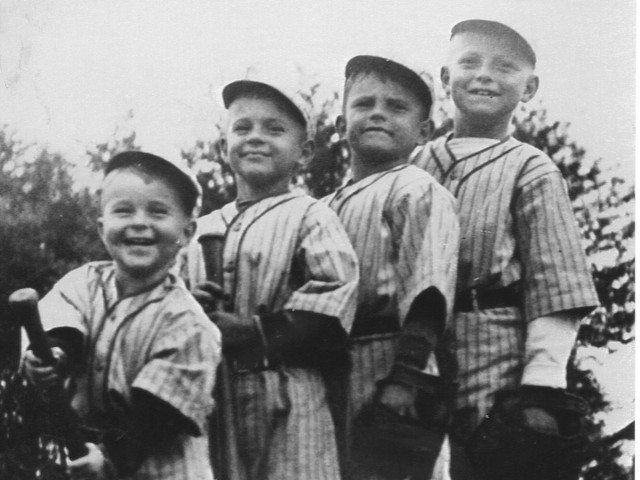
I am the youngest of the Wood brothers — Hayes, David, Hugh “Hooty” and Tom — all born between 1926 and 1931. We were very close and shared many things together in Old Miami. We all were born at Victoria Hospital on Northwest 10th Avenue, which still exists as a nursing and rehab center.

We were raised on a truck farm on Southwest 19th Street, about five acres that is now part of Shenandoah Park and middle school. We were always playing ball in the park. The park had many famous supervisors who went on to play pro ball, including Al Rosen with the Cleveland Indians and Lefty Schemer with the New York Giants. My only buddies still around are Lester Johnson, Fred Kirkland and Ed Woitke.

We attended and were baptized at the Riverside Baptist Church on Southwest Ninth Avenue and First Street (the congregation moved to Kendall in the 1970s and the church sanctuary now houses the Manuel Artime Theater).

As kids, we worked with the farm’s chickens and vegetables and created Wood Brothers Poultry and Produce Co. We sold the products to Wrights Market on Southwest Eighth Street and 22nd Avenue. My brothers and I all attended Shenandoah Elementary and Junior High schools. I also went to Coral Way Elementary when it opened in 1937 on Southwest 19th Street and 13th Avenue. We all went to Ponce de Leon Senior High School on U.S. 1 in Coral Gables. My brothers Hayes and Hugh and I were president of the student council. I met my beautiful wife, Virginia, in high school in 1949 and in June we will have been married 60 years. Ponce is now a middle school and the high school is now Coral Gables Senior High on Bird Road.

My brothers and I founded a band and played at high school dances, New Year’s Eve parties and other events. Hayes played saxophone; David and I, trumpet; and Hugh was on the trombone.

Someone gave my brother Hooty an Indian Pinto horse. He would hop on bareback and pull me up behind him and we would ride all the way down 22nd Avenue to the bay, where we would swim in cold, ice-blue water so clear we could see the bottom and the fish clearly.

We watched the roller derby at the Coliseum on Douglas Road. It is now a Publix and eight-story condominium. John Rosasco was the star of the team. He later ran Venetian Pool in Coral Gables, where everyone loved to hide in the caves. Fader’s Drug Store on 22nd Avenue and Coral Way was a popular spot for milkshakes and root beer floats. I remember watching Pan Am Clippers on the bay in the Grove on the site of what is now Miami City Hall.

It was only a bike ride to the Tower Theater on the Trail and for nine cents I could see two double features, a cartoon and a live amateur show. We could hop the Dunn bus at the corner and go downtown to various theaters — the Rex, Town or Paramount — and have a grilled-cheese sandwich at the counter of the Red Cross Drug Store, or a hotdog at Woolworth’s for a dime.

There were many favorite eating spots: Rosedale Delicatessen, owned by the Pont brothers (I would have corned beef on rye with a slice of onion and mustard, a big kosher dill and some potato salad); Kitty and Jean’s on the Trail; hotdogs at the Pig Trail Inn on Miami Beach. Who remembers the Mayflower Doughnut Shop on Biscayne Boulevard sporting a sign that read, “As you wander through life in search of your goal, keep your eye upon the doughnut and not upon the hole.”

Sometimes all four of us would take a long bike ride to the deserted University of Miami skeleton campus, where we would swim in the lagoon. Today, UM is one of the finest private universities in the country. I am honored to serve as a member of the Board of Trustees. All four of us worked our way through UM. Three of us graduated with juris doctor degrees and one with a master of engineering.

All of us served in the armed forces: three Naval officers and one Army Air Corps technician.

One of my favorite memories was riding on the handlebars of my oldest brother’s bicycle on a Saturday morning as we and my other brothers went to the Ringling Brothers Circus in the vacant lot on the northeast corner of Coral Way and Douglas Road. There, we watered the elephants until the matinee started. We got free admission plus money we spent on hotdogs.

My brothers always looked out for me and I will never forget them as I am blessed to still live in Miami, the Magic City.

It was late 1959 when my parents decided to follow my mother’s sister and her husband down to South Florida from Wilkes-Barre, Pa., where I was born a year earlier.

We settled in North Miami on 200th Street. My older sister, Susie, and I attended the Little Red School House on 183rd Street and later Norland Elementary School. My parents divorced and soon thereafter we moved to Miami Shores where I attended second grade at Miami Shores Elementary. In 1966, we moved again to Coral Gables and lived in the 1300 block of Obispo Avenue for the next 14 years.

It was while attending the third-grade class at Coral Gables Elementary that I became involved with Cub Scouts. First with a friend’s parents who were our pack leaders, and later at a home near the Coral Gables Youth Center. Most of the kids I knew grew up at the Youth Center played Civitan baseball, football or soccer.

When the time came to cross over to Boy Scouts in 1970, I joined Troop 229 at St. Mark’s Lutheran Church across the street from Coral Gables High School. Scouting opened up a world of learning for all of us. We participated in numerous service-type events in South Florida, such as carrying the banners in the Orange Bowl parade, beach clean-ups and participating in the Scouting Shows and Camporees in places like Tahiti Beach off Old Cutler Road, and the old blimp base by the zoo.

We would camp out at Fish Eating Creek, Camp Seminole, the Everglades and attend the Seminole Indian Tribe’s “Wild Hog Barbeque” weekend where we participated in the greased pole climb and took free swamp buggy and air boat rides through the Everglades. I remember sitting in front of my tent at Camp Sawyer in the Keys on a dark starlit night with flashlight in hand memorizing my Torah portion for my upcoming bar mitzvah at Temple Judea. We traveled to Sebring to attend summer camp and when it closed in 1971, we moved to Inverness, to the new McGregor Smith Scout Reservation where I was also a counselor and taught handicrafts.

In the early ’70s, my mother had an office in the corner building of Main and McFarlane Road in Coconut Grove where she was quite active in the business community. Through her affiliations, I met numerous artists who had homes and studios in the Grove. After school, I would visit the studio of a wood sculptor who helped me earn my wood-carving merit badge. As a teenager, I would attend art openings in the lobby of the Bacardi Building and other galleries around Miami.

While attending Gables High, I participated in metal shop class where I learned the art of welding, copper and metal work and eventually produced numerous award-winning entries for the Dade County Youth Fair art competitions. All these skills and experiences eventually led me to my success and career as an architect.

In 1970, the school board enacted “integration” and for seventh grade we were bused from Coral Gables to attend George Washington Carver Middle School in the Grove. The first few months were a struggle for everyone, but we all settled down and the transition to Ponce de Leon Junior High the following year was uneventful. At Carver, I befriended a black student. We became good friends and we taught each other about our respective cultures.

I presented the idea to my new friend to join our Boy Scout Troop that year and that opened up the door of racism, which I experienced for the first time. I stood by my friend and made sure he shared the same experiences that I did in Scouting. For his first camp out, we shared a tent and I taught him outdoor skills that were taught to me.

In my early college years (1977), I would venture down to Key Largo to stay at my aunt and uncle’s weekend house. One evening I was on the 18-mile stretch and came upon debris all over the road. After I stopped, I noticed the lights from a partially submerged pickup truck in the adjacent waterway and found two individuals slumped in the front seat with water up to their chests. The first aid skills I learned in Scouting kicked in and I acted quickly and carefully to remove the injured driver and passenger. I was later told by the truck’s owner that the passenger would have died if first aid had not been administered.

My wife and I have been blessed with two wonderful children who were born and raised here in South Florida. Over the many years, we have all grown to appreciate all that this area has to offer. My sister (a nurse practitioner in the Broward hospital system) and her husband have two boys who are both Eagle Scouts and a daughter who has always been active in the Scouting community. Whenever I see Scouts in the community, I express that it is important to make sure they put the effort in to pursue the rank of Eagle. Only 2 percent of all Scouts make the rank of Eagle and I am grateful that I earned mine.

Let’s set the scene: It’s early 2004, and my mother is taking my younger sister and me to go watch Cats: The Musical at what was then known as Jackie Gleason Theater on Miami Beach.

At 12, the only prior experience I ever had with anything related to theater was multiple viewings of The Nutcracker ballet and, to be honest, after the third time, the excitement dwindles. But this time felt so different, even before the show had begun; the whole atmosphere was more inviting, not as repressed as the behavior expected at a ballet.

I sat excitedly as the curtains rose to reveal a wonderful set, and by the first chorus of the prologue, I was hooked.

I watched in awe as these characters danced and sang before me, keeping my interest the entire time. Not once did I tire of any aspect; it was love at first sight. I was so enamored with the show that once it was over, I promptly begged my mother to buy the DVD of a special Broadway recording of the show. My sister enjoyed the performance as much as I did, and we reveled in watching the DVD over and over again.

After a couple of weeks, we knew each character’s name, the lyrics of each of their individual songs, and even learned the choreography to most of the pieces. We would shamelessly put on shows for our parents, grandparents and little brother and ensure that the world knew of the greatness that was CATS. I am not ashamed of the affection I had and continue to have for this musical. It was that one performance at age 12 that ignited in my heart a love for theater I didn’t know I possessed.

I had taken dance class starting at age 6, and as much as I enjoyed being with my friends and going to class, I knew deep down that I wasn’t very good. I tried my hardest but at best, I was second-line material. But nevertheless, I danced my little heart out for years to come, seeing my sister grow into a beautiful dancer and leave me in the dust. My sister was born to be a dancer; her natural ability is undeniable. A part of me wished I hadn’t made the silly decision of stopping my jazz/ballet training to take one year of hip hop, and I did find my niche in tap dance, but as comfortable as I felt doing that, I longed for more. I continued to dance tap well into my teen years, and even started volunteering in the summers at the studio where I took class, The Roxy Theatre Group.

Year after year, I worked with the youngest group of children and would accompany them to their dance, singing and acting classes, even participating in the activities so as to encourage all of them to do the same. It was all good until one day, during the summer before, I turned 17. I opened my mouth in singing class and someone actually noticed.

The voice teacher asked me to speak with her after my group’s session ended. “Have you ever taken lessons before?” she asked, to which I shook my head silently. “Well you can sing!” I was overcome with emotion.

I had sung in my room or in the shower and always assumed that I sounded nice, but never to a person who could actually tell me so. She asked me to perform in the end-of-summer show with my group, as Fraulein Maria from The Sound of Music in “Do-Re-Mi.” The day of the show, my nerves were at their peak; I had danced in front of an audience countless times, why would this be any different? I sang with my beloved group and surprised not just my family and peers, but myself as well.

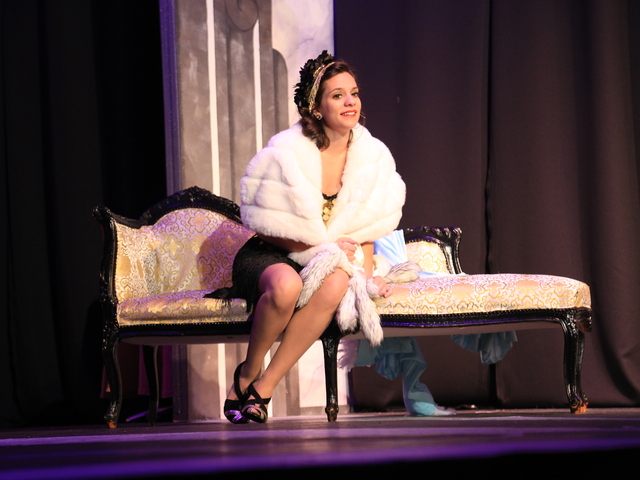
I couldn’t pursue my love for theater while in high school because I was heavily devoted to my academics. However, upon entering college and having a little more wiggle room to do what I pleased, I was able to venture out and audition for shows. It wasn’t until I was 19 that I got my first role in a show: Gloria Thorpe in The Roxy Theatre Group’s production of Damn Yankees. Sure, I wasn’t the only one playing the part (the role was shared between another young lady and myself), but it was the principle of it. I was doing what I secretly loved, and that was just the beginning.

I never expected to get caught up in the Miami theater community. To be honest, I wasn’t aware of how prominent the arts even were in Miami. But I’ve seen how much it’s grown since I was a child watching my first musical: from community productions at The Roxy Theatre Group, Actors’ Playhouse on Miracle Mile, Area Stage in Coral Gables, to new and innovative plays at New Theatre in Cutler Bay, and even to professional touring shows at The Adrienne Arsht Center in downtown Miami, there are so many outlets where one could be exposed to quality theater in Miami.

I don’t, however, want to limit Miami’s art prowess to just theater. The dance community here is a fierce one, with so many studios vying for talent. The visual art field in Miami is also a force to be reckoned with, not only in traditional museums, but with areas like Wynwood, a culturally diverse area of artistic freedom with beautiful art, both modern and classic, and excellent food.

I love not only supporting the arts here, but being a part of the arts and growing with that community. This city is bursting with talent, and yet so many people are unaware.

Of course, people automatically connect the performing arts with New York City or Los Angeles. But so many great artists originate from right here at home. Miami is a place that thrives on creativity. I’m proud of the place that it’s become and am very excited to see where it will go from here.

My father was a traveling salesman for my grandfather’s haberdashery business, Dixie Company, which manufactured white suits for the poor to buy on layaway in the rural areas of the deep South. He would be more centrally located out of a base in Florida, so my parents, baby sister and I moved to Miami Beach from New York City when I was 6 years old.

We first rented an apartment on Pine Tree Drive near 41st Street. There were hotels on nearby Collins Avenue, but no apartments at that time. That area of Pine Tree was all apartments, not single family homes as it is now. Indian Creek Canal was a lazy waterway with sight-seeing boats docked a little to the south of 41st Street.

The first thing I remember was going over the MacArthur Causeway and seeing the old Flamingo Hotel. The roof would light up at night and it was spectacular. After the hotel went out of business, a group of us kids would bicycle over there to look at the pool. It was a salt-water pool and full of fish, though the hotel was uninhabited.

The MacArthur Causeway was an old drawbridge made out of wood. That, and 79th Street Causeway, were the only ways to access Miami Beach. My grandfather’s brother would take me fishing off that old wooden bridge.

When I was in second grade, we rented a house on Nautilus Court, just off Alton Road. I had a friend whose father was a doctor and he lived behind Mount Sinai Hospital on an island with homes for people who worked in the hospital. It was connected to the hospital by a pedestrian bridge. Mount Sinai’s location originally housed a hotel called The Nautilus.

I went to Nautilus Elementary and in the sixth grade I attended North Beach Elementary on 41st Street, where it still stands and functions today for my friends’ grandchildren. There was a vacant lot on Nautilus Court where soldiers had been bivouacked during World War II.

My father saw the opportunities in Florida development and real estate and began building in North Miami Beach. He built custom homes in a section named Skylake, and then went on to build in an area quite remote, called Kendall.

I started building there years later where Brown’s Airport had been, on Southwest 104th Street and 77th Avenue.

My parents bought a lot at 5004 North Bay Rd. and we built our house in 1950. There was no air conditioning at that time; our house had a hurricane fan to cool it. Jalousie windows and vented wood slats in the interior spaces allowed the air to move freely within the residence.

Carl Fisher’s mansion was a few lots down and we bought the land from his estate. He reportedly had gone bankrupt at some point and in order to save on taxes, he filled his land in. To our chagrin, when we put the pilings in to build the home, we hit his magnificent pool made of thousands of pieces of mosaic tiles.

The house was on Biscayne Bay and as a teenager I would ski in front of the tourist boats that would come to show off Millionaire’s Row.

Some of the families made their parties and celebrations very ostentatious. One of my friends had Tony Bennett as the entertainment at his Bar Mitzvah. They could not stop outdoing one another. Eddie Fisher sang on another’s yacht.

I would take my boat to what is now Fisher Island. On the south side of the island, we would all go fishing. Nothing was there but an abandoned Vanderbilt mansion and rows of large gas tanks kept for storage. There was a road around the island, but it was uninhabited except for an occasional vagrant.

Also, at that time, Lincoln Road was a two-lane street for car traffic. One could park one’s car and do high-end shopping at Saks Fifth Avenue or The Dinghy. The street boasted three theatres — the Carib, the Beach and the Cameo.

In ninth grade I was sent to a boarding school in St. Petersburg called Admiral Farragut Academy. In 10th grade, I entered Miami Beach Senior High School. The old Beach High was on Pennsylvania Avenue and Española Way. It was not air-conditioned and most of the students were Jewish.

I have kept in touch with my friends all these years and have watched Miami Beach and South Dade grow beyond my wildest expectations.

I’ve spent my entire life in South Florida and after celebrating my 80th birthday I’m sharing my story.

My father Danny came from Greece to Miami before the 1926 hurricane hit. He joined his sister Mary Hatzopoulos and her family.

By 1929 he saved enough money to return to Greece and marry my mother Evangelia. When they returned as newlyweds, my Mother called Miami “Paradise” and she lived here the rest of her life.

I was born in 1930 at the Edgewater maternity hospital in what is now known as Buena Vista in the Design District. My family owned an apartment building at 4025 NE Second Ave. near Moore Furniture Company. As a child I loved to ride the trolley car to downtown Miami.

Miami was a very small town then where many wealthy people would come and spend the winter season. They would either arrive by automobile or ride the train called the Seaboard Railway or the Silver Streaker.

I attended Miramar Elementary School on Northeast 19th Street and Second Avenue. When I started the first grade I could not speak English, but was quickly taught by my first grade teacher, Ms. Young.

I went to Miramar through the fourth grade and then Buena Vista Elementary and Robert E. Lee Junior High for the seventh and eighth grades.

About this time my family bought a house and I attended ninth grade at Shenandoah Junior High and afterwards went to Miami Senior High, from which I graduated in June 1948. The house I lived in was one-half block east of Miami High — I loved walking the short distance for my first class.

After graduating from Miami High I worked in the insurance department of the American Automobile Association (AAA).

Things I remember about growing up in Miami include swimming at South Beach at 10th and Ocean Drive. During World War II, U.S. Army soldiers filled the Art Deco hotels and the windows facing the ocean were covered with black-out shades because of the threat of foreign submarines and ships in the Atlantic.

I raised funds for Greek War Relief by performing Greek Dances at the Bayfront Park band shell. On Saturday I went to the movies at the Olympia, Roxcy or the Paramount theatres on Flagler Street.

After the movie we would eat at the Paramount Restaurant, or we would gather at the downtown Walgreen’s in the basement restaurant. Miami was the best back in those days.

With my young children I often ate lunch at the Burdines Tea Room downtown. I shopped at the great women’s clothing stores Hartleys, Nordells and of course, Burdines.

In 1955, I married George at St. Sophia Greek Orthodox Cathedral and we had our children Alexandra, James and Danny. James and his wife Nikki have two daughters, Arianna and Mia.

Miami is a special place — a paradise.

In 1925, my parents and I disembarked in Miami after a three-day train trip from Chicago, and went to stay at a cottage surrounded by a grapefruit grove that belonged to my mother’s aunt. I was three years old, and it marked the beginning of my nearly nine-decade-long adventure in South Florida.

That first evening I responded to a noise at the back door, and found what appeared to be a large kitten, but turned out to be a Florida bobcat. We lived on that farm, now part of the University of Miami campus, for three months before the electric grid reached us.

After the 1926 hurricane, which we rode out in the old McAllister Hotel, we relocated to Fort Lauderdale where my dad operated the city’s only shoe store.

One local character was a Seminole named “Shirttail Charley,” who wandered the unpaved streets cadging nickels and dimes for beer. One day he produced a 50-cent piece as a deposit on “paleface shoes.” Dad gave him a pair, which Charley carried under his arm, donning them only when entering a bar or store.

My life in journalism and public relations began when I was 15, and my football coach asked me to make notes on practice sessions for the Fort Lauderdale Daily News sports editor. After two weeks the editor persuaded me to file complete stories, eventually with a byline. After three months he said, “You’re doing a great job, kid, and I’m going to pay you, too!” He did — one dollar for football season and a second dollar for covering baseball season.

Early on I became fascinated with flying. One day, my best friend Leonard and I scraped together two dollars for a 30-minute sightseeing flight in a World War I “Jenny.” My parents were furious. The pilot was fond of bourbon, and we were henceforth grounded.

Saturday morning movies cost a dime in those days, and after seeing “The Last of the Mohicans,” my pal and I got mohawk haircuts a full 75 years before they became trendy. We were forced to wear caps to hide our “ avant garde” style for months.

After almost four years at the University of Florida and summers spent as a full-time Daily News reporter, I was summoned by the Army Air Corps and eventually flew 35 combat missions as a navigator on a Flying Fortress bomber in the European front.

On a January 1945 bombing mission two of our engines were shot out, forcing us to crash land at a Belgian farm. Both German and Allied forces were in the vicinity. Fortunately, the British got to us first.

In June 1945, I began the final six months of military duty as a public relations officer at Coral Gables’ Biltmore Hotel, at that time a rehabilitation hospital. Those were heady days, with 315 nurses to date, two swimming pools and a golf course.

Among the staff were special services officer Ben Hogan, whose assignment was golfing with visiting generals, and future Dade County Mayor Steve Clark, the payroll sergeant.

In January 1946, capitalizing on my Biltmore PR contacts, a University of Florida fraternity brother and I opened a public relations agency on Lincoln Road. We specialized in nightclubs, restaurants and hotels, including the new oceanfront Sherry Frontenac.

Through the years I have represented such interesting clients as evangelist Oral Rogers, the Fontainebleau resort and Rosie the dancing bear. After arranging an “interview” for Rosie and her trainer at the Miami Herald, the trainer bowed out, leaving the bear and me to fulfill the assignment. When we arrived at the old Herald building on Miami Avenue, pandemonium broke out. A photographer positioned Rosie at a typewriter and the clamor drew Publisher John Knight from his office.

Glaring at me, Knight asked, “What’s going on, Stuart? I thought you only represented hotels!”

“Mr. Knight,” I quickly replied, “this bear just bought a Miami Beach hotel.” The publisher led the laughter.

My public relations career, mostly representing leisure-travel clients, has provided me extraordinary globetrotting opportunities. Though I have visited countless cities in more than 80 countries and every continent except Antarctica, none has replaced Miami.

I’ve led a charmed life in South Florida. In 1948, I married Edith Koenig, a registered nurse, newly arrived from New Jersey. In 1950, I received the first GI housing loan on Miami Beach, which allowed us to build a three-bedroom home on Biscayne Bay for less than $17,000.

Our daughter, Cathy, now a veteran editor and author for National Geographic, and son, Andy, who has taken our PR agency to new heights, have given me three equally successful grandsons.

Following my first wife’s passing after 44 years of marriage, I married another nurse, Sandy Sharpe. We summer in Greenbrier County, West Virginia, where my claim to fame is as the region’s reigning barbecue ribs champion.

Because Miami has been good to me, I strive to give back to the community. We support the University of Miami’s Sylvester Comprehensive Cancer Center and the University of Florida, where my son, daughter-in-law Maria and grandsons Alan and Michael are alumni, too. We also support Camillus House.

I’ll celebrate my 92nd birthday this month and still manage to wrestle Gulf Stream game fish as well as play the same bad golf I’ve played for 65 years.

My mother lived until she was 101. That’s my goal now. But even if I don’t make it, Miami has provided a more than rewarding life for me and my family.

Like every other night, I sit by my window to finish my homework, but tonight the light of the full moon distracted me. It was a beautiful night, but I could only see the full white moon, not the stars. Then I started to remember a time during my childhood when watching the stars was possible every single night.

I also remembered this girl catching cocuyos (fireflies), playing hide and seek with her cousins and friends from the barrio (neighborhood). It was me as a child, with the people I love and whom today I miss the most. Since watching the sky brought me some good memories, I decided to look at albums of photos and videos I had from when I lived in Cuba.

Going through the pictures, I could smell the soft aroma of the jasmine flowers, feel the breeze from the open field, and the sound of the small waterfall near my home. I could hear the woodpecker doing his work on the tall palm tree, the tractor in the far distance plowing the land to plant the sugar cane later in the year, and see the cows passing by the house, which provided me with the milk I drank for 16 years.

I grew up in the countryside of Cuba, in Villa Clara, in Viana, a very small town, and when I say small I mean it. We were roughly 1,000 people. There was only one main road with a broken surface, and the other roads were covered with an orangy dust and when it rained you’d better wear rain boots or you could lose the only pair of shoes you owned.

There was also only one school from pre-kindergarten to sixth grade, and when you got to middle or high school you had to travel to another town. We had one library, where new books came once a year, and the dust and humidity of the place damaged them. There was one clinic, one pharmacy, one food store, three or four clothing stores, and restaurants were 20 kilometers away from where we lived so we had to travel there. And when I say travel I don’t mean go in your car. Cars were a luxury for only a few, so we had to go on buses when they came. It wasn’t easy but somehow we survived. I love the place where I grew up, and I wouldn’t trade it for anything in this world.

As I viewed the pictures, one caught my attention because it brought one of the best memories I have with my uncle, grandfather, and dad. In the picture, we are seated in the green chairs around our dinner table in our old house, watching our Samsung TV of the year 2000. That was our first color TV and we took care of it as if it were gold. We wore orange shirts and we were watching a baseball game. And you’ll have to ask, why is that picture so special? Anyone can have a picture like that one. But since I was little I developed a passion for every televised sport because I saw my dad, uncle, and grandpa watching them; that’s how my passion was born.

My favorite sport of all time was baseball. Every time the season started, my uncle, my grandpa, my dad, and I stayed up until 1 or 2 a.m. watching the games. Obviously I was an Orange fan, that was my Villa Clara team, and we always supported them. The rush of adrenaline, our hearts pumping out of our chests, our sweaty hands, but above all, that moment we all shared together as a family. Now it’s so different; we are 90 miles apart from each other, and every time the season starts my grandpa and my uncle tell me, “¿Vivi, cuando vamos a ver el juego juntos?” (Vivi, when are we going to watch the game together?).

Now, my heart drops because we are close, yet so far apart and I can’t see them as much as I want to. That moment is now in our memory.

I continued looking through the albums, keeping in mind the magical power of pictures. I found more from Christmas. Christmas in Cuba is very different from those here. There are not many decorations in houses or parks. You’ll see a small Christmas tree in most houses with the manger scene, and that’s about it. We celebrate Nochebuena (Christmas Eve) on December 24 and New Year’s Eve on December 31. All the family comes together — Mami, Papi, brothers, sisters, grandpa, grandma, cousins, uncles, aunts, and close friends that are like family. We celebrate with lots of food, rice and beans, and the best puerco asado ever, salads (tomato, cucumber, lettuce, cabbage, and avocado) with lime and a little bit of oil on top and salt, and sweet and salty fried tamale. Yum!

There is nothing better than that, and the dessert time: flan, pudding, grapefruit (and if you eat it with cheese it would be a hundred times better), peanut brittle, fritters with a sweet salsa, and the list keeps on growing as people come. All of the desserts and food are homemade, which make them so much better. While the food is being cooked most of the men in the family start playing dominos, a tradition in our family. Every time we celebrate something, the domino table is around. After everything is cooked we set the table and we eat. The Cuban coffee comes right after.

Then the real party starts. We put on the music and dance from salsa to reggaeton and every genre in between. Everyone has a good time.

Children don’t get to open presents on the night of the 24th because we celebrate “El Día de los Reyes Magos” on January 6. On that day, children open their presents. December 31 is the day that we celebrate the end of a year, and we kind of do the same as on December 24 with lots of foods, sweets, and drinks. We burn the old year by making a scarecrow that symbolizes the old year, and exactly at midnight, we burn it so the New Year can come with prosperity, health, and happiness. We kiss and hug every family member and wish for a better year, and for all the dreams to come true.

One picture was hiding beneath the blanket, the last picture we took before coming to the United States. Suddenly, my heart felt as if it had been ripped out of my chest. It has been four long years since I’ve seen the people in this picture, since I’ve hugged them. The picture was taken at the airport in front of the automatic doors, where once we went in we couldn’t come back. There we were: my mom with her twin brother, Tio Luis, my dad, my brother, and my cousin Yuni, who was like a sister to me. My mom, dad, brother and I were the only ones leaving. The time to say goodbye was the hardest one, but that is another story.

Translate »