Skip to content
Formerly, HistoryMiami Museum

In November 1967, after my girlfriend and I became registered nurses, we moved from Wisconsin to Miami Beach. This was a goal we had dreamed of since high school.

We lived at the Castaways Motel in Sunny Isles Beach until we secured our first jobs at Miami Beach’s Mt. Sinai Hospital. After saving our money for several months, we moved to Miami Springs. It was a party, day and night, with all the flight attendants and pilots staying there. Our favorite club was 6 West. It was our hangout to dance and have a good time. We could be found listening to the talented Rhodes Brothers there every Sunday afternoon.

I left Mt. Sinai in 1969 and did private duty nursing that summer. I was dating an executive with A&M; Records. He invited me to a concert in Woodstock, N.Y. but I was unable to go because I was about to start my new job the following Monday in the Emergency Department at Jackson Memorial Hospital. Woodstock, who knew?

While working in the E.D., I was privileged to meet and work with Dr. James Jude. Dr. Jude was a thoracic surgeon who helped develop the use of CPR (cardiopulmonary resuscitation) lifesaving technique. Working with Dr. Jude, I taught CPR classes to my co-workers as well as the Miami-Dade and City of Miami paramedics. I also set up the first “crash cart” in the E.D., which we used for patients in cardiac arrest.

There were times we literally had to jump up on the stretchers to perform CPR and other procedures. A friend of mine and I decided it was not appropriate to wear uniform dresses in situations like those so we decided to wear white uniform pants and pastel uniform tops to work.

We were the first at Jackson to do so. We had nurses coming from every department to see us. The word had spread quickly that dresses were out and pants were in. The majority of nurses now wear uniform pants.

Part of the E.D. consisted of Ward D, or Detention Ward. Essentially, it was the prison ward of the hospital. Anyone who was sick or injured and under arrest was sent to Ward D. We treated murderers, rapists, and even lawyers or doctors on occasion. We were also responsible for treating “Drug Mules,” those who swallowed or inserted packets of heroin or cocaine to avoid arrest.

Sadly, we witnessed several of them die due to the drug packets breaking open in their abdomens. I worked primarily in Ward D from 1972 until I retired in 2000. Jackson Memorial Hospital was a wonderful place to work. I learned so much and had an incredible career as a registered nurse.

Coconut Grove was a haven for artists, musicians, and the “flower child” generation. I moved there in 1969, finding a cadre of friends who would come together in Peacock Park to play our guitars and make delicious vegetarian meals for everyone. The tallest buildings in the Grove at that time were the Coconut Grove Bank and the Mutiny on Sailboat Bay.

It was such a quiet and peaceful time in the Grove. We had plenty of places to congregate. Dick’s Old Grove Pub was one of those places. They had the best cheeseburgers in the greater Miami area. One Sunday, the Jefferson Airplane rock group came in and played all afternoon. We would catch breakfast at the Florida Pharmacy, lunches and dinners at the Feed Bag, the Village Inn, The Taurus, 27 Birds, Lum’s and many more.

On any given day, one could see great musicians walking or biking through the Grove: Vince Martin, Bobby Ingram, John Sebastian, Neil Young, David Crosby, Jimmy Buffet and so many others.

We didn’t restrict ourselves to eating and playing in the Grove, though. Some terrific restaurants in Coral Gables and South Miami included Fox’s Sherron Inn, Jahn’s Ice Cream Parlor, the Sweden House, Sambo’s, the Glorified Delicatessen, Uncle Tom’s BBQ, Food Among the Flowers, The Monk’s Inn and Vinton’s.

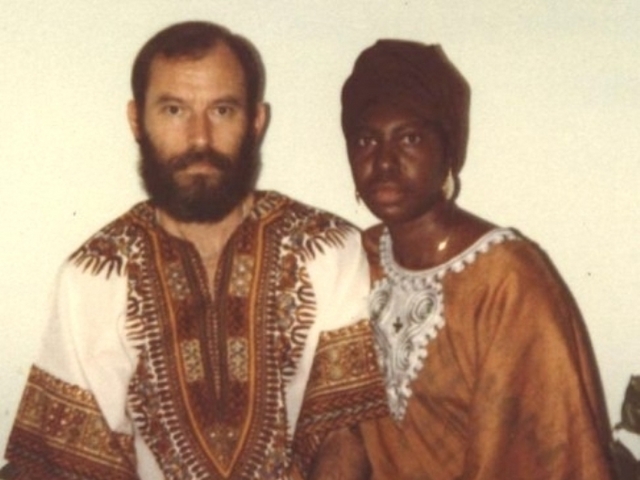
Riding my bicycle through Coconut Grove one day, I met my future husband Bruce Liptak. He and a friend had just opened Om Jewelry and Leather. We married in 1972 but Bruce passed away seven years later at the age of 36 from a cerebral aneurysm.

Friends and family were very instrumental in helping me through that horrific time. In 1982, I had a dinner party and some friends brought over John Blocker. We married in 1995. He has a daughter, Vergene, who was 4 years old when I met John. I helped raise her and consider her my very own daughter. She is now 38 years old.

After retiring from JMH in 2000, we moved from Coconut Grove to Sunny Isles Beach. I wanted to remain active in my profession so I returned to Jackson and worked part-time for another six years. My husband, a cardiopulmonary technologist, still works at Jackson.

I no longer work but I am a tireless volunteer. I take classes and am on the board of our condo association. In a fitting tribute, the building in which we live in stands where the Castaways once stood. It’s a lovely reminder that I’ve come full circle in this city.

I left Mt. Sinai in 1969 and did private duty nursing that summer. I was dating an executive with A&M; Records; he invited me to a concert in Woodstock, N.Y. but because I was about to start my new job the following Monday in the Emergency Department at Jackson Memorial Hospital, I was unable to go. Woodstock; who knew.

While working in the E.D. I was privileged to meet and work with Dr. James Jude. Dr. Jude was a thoracic surgeon who helped develop CPR (cardiopulmonary resuscitation). Working with Dr. Jude, I taught CPR classes to my co-workers as well as the Miami-Dade and city of Miami paramedics. I also set up the first ” crash cart “in the E.D. which we used for patients in cardiac arrest.

There were times we literally had to jump up on the stretchers to perform CPR and other procedures. A friend of mine and I decided it was not appropriate to wear uniform dresses in situations like those so we decided to wear white uniform pants and pastel uniform tops to work. We were the first at Jackson to do so and had nurses coming from every department to see us. The word had spread quickly that dresses were out and pants were in. Since that day the majority of nurses wear uniform pants.

Part of the E.D. consisted of Ward D, or Detention Ward. Essentially, it was the prison ward of the hospital; anyone who was sick or injured and under arrest was sent to Ward D. We treated murderers, rapists,, even lawyers and doctors on occasion. We were also responsible for treating ” Drug Mules,” those who swallowed or inserted packets of heroin or cocaine to avoid arrest. Sadly, we witnessed several of them die due to the drug packets breaking open in their abdomens. I worked primarily in Ward D from 1972 until I retired in 2000. Jackson Memorial Hospital was a wonderful place to work. I learned so much and had an incredible career as a registered nurse.

Coconut Grove was a haven for artists, musicians, and the “flower child” generation. I moved there in 1969, finding a cadre of friends who would come together in Peacock Park to play our guitars and make delicious vegetarian meals for everyone.

The tallest buildings in the Grove at that time were the Coconut Grove Bank and the Mutiny on Sailboat Bay. It was such a quiet and peaceful time in the Grove. We had plenty of places to congregate. Dick’s Old Grove Pub was one of those places, having the best cheeseburgers in the greater Miami area. One Sunday afternoon, the Jefferson Airplane rock group came in and played all afternoon.

We would catch breakfast at the Florida Pharmacy, lunches and dinners at the Feed Bag, the Village Inn, The Taurus, 27 Birds, Lum’s and many more. On any given day one could see great musicians walking or biking through the Grove: Vince Martin, Bobby Ingram, John Sebastian, Neil Young, David Crosby, Jimmy Buffet, and so many others.
We didn’t restrict ourselves to eating and playing in the Grove, though. Some terrific restaurants in Coral Gables and South Miami included Foxx’s Sherron Inn, Jahn’s Ice Cream Parlor, the Sweden House, Sambo’s, the Glorified Delicatessen, Uncle Tom’s BBQ, Food Among the Flowers, the Monk’s Inn, and Vinton’s.

Riding my bicycle through Coconut Grove one day, I met my future husband Bruce Liptak. He and a friend had just opened Om Jewelry and Leather. We married in 1972 but Bruce passed away seven years later at a the age of 36 from a cerebral aneurysm. Friends and family were very instrumental in helping me through that horrific time. In 1982, I had a dinner party; friends brought over John Blocker. We married in 1995. He has a daughter, Vergene, who was four years old when I met John. I helped raise her and consider her my very own daughter. She is now 38 years old.

After retiring from JMH in 2000, we moved from Coconut Grove to Sunny Isles Beach.I wanted to remain active in my profession so I returned to Jackson and worked part-time for another six years. My husband, a cardiopulmonary technologist, still works at Jackson.

I no longer work but I am a tireless volunteer; I take classes and I’m on the board of our condo association. In a fitting tribute, the building in which we live in stands where the Castaways once stood, a lovely reminder that I’ve come full circle in this city.

I was born in New Castle, Pennsylvania and moved to Ft. Pierce, Florida, in June of 1940. Shortly after we moved to Ft. Pierce the Japanese attacked Hawaii and we entered WWII.
Back then the newspapers were not allowed to print everything that was going on. There was a slogan: “a slip of the lip will sink a ship!”
When a boat was blown up off the coast of Fort Pierce, we could feel the vibration in our homes. There was no news on the radio or anything in the paper and for some reason we never talked about it. I think being teenagers, we had no idea how serious it all was.
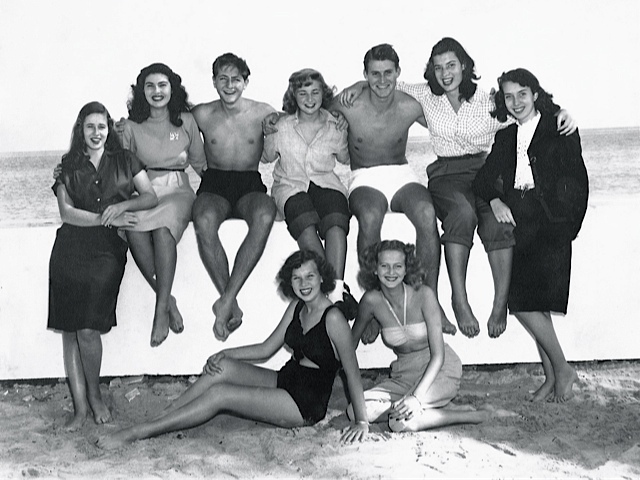
One late afternoon, two girlfriends and I were sitting on the beach watching a convoy of several big ships go by. They were so close that we could see the sailors wave their shirts at us and we knew they were watching us. That night every one of those ships was sunk. We went to the beach the next day and watched the ships still burning—I don’t know if there were any survivors. This was not on the news or in the paper.

The Ft. Pierce beach was an island by itself and the only way to it was over a drawbridge. There were a few houses on the beach, a Coast Guard station, a Coast Guard tower that was manned 24/7 and a casino with a dressing room, rest room, and a snack bar that was right on the beach.

The Coast Guard fellows had one day off, one day stand by, and one day duty on the tower. It was within walking distance of the casino. They usually spent a lot of their “time-off days” at the casino. As dating teenagers, we too spent our free time at the casinos when we went to the beach. As we had no cars and gas was rationed, we rode our bikes everywhere or we walked.

One night Hazel and I went to a movie and in the middle of it, an usher came in and announced that all Coast Guard men were to report to duty, then all Coast Guard auxiliary were to report, and then any doctors were to report to the hospital, and so on until there were just a few of us left in the theatre.

When I got home, my dad took us over and parked our car by the hospital and we saw ambulances go to the hospital and then to the funeral home. Later we learned a whole American convoy had been bombed, burned, and sunk. We often heard bombing blasts that were so drastic that our windows and walls shook. A couple of places in town could hardly keep glass in their windows because of the vibrations.

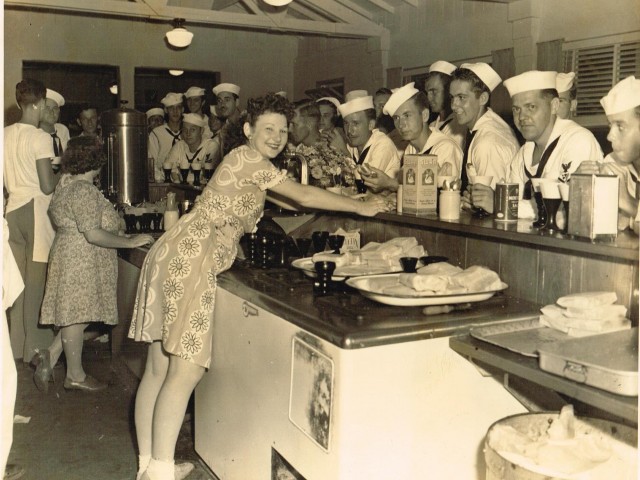
We had a United Service Organization (USO) in Fort Pierce which organized programs, services, and entertainment for the troops. Any young, unmarried women who wanted to volunteer had to be approved by a committee of the organization before they could participate in the activities.

All activities were well chaperoned. Camp Murphy, now Jonathon Dickenson State Park, was a radar military base, located south of Stuart. They would bus us girls to Camp Murphy once a week to a dance. The bus was stopped at the base entrance and thoroughly inspected. We were not allowed to leave the bus until we got to the dance hall and then we were escorted by military men on each side of the sidewalk and not allowed to leave the dance hall at any time.

Ft. Pierce was financially in bad shape during the war. There were no tourists and no money was coming in. The politicians were trying to get a military base to come into town to bring in money and finally, a surprise! A train load of sailors came into Ft. Pierce; no one knew they were coming so the city did not know where to put them or how to feed them.

A Red Cross city manager and everyone in town went to work to solve this problem and the result was an amphibious Navy training base in Ft. Pierce. They took over the south beach which included all the mosquitos and sand flies! The beach closed to everyone except military. Again we had a lot of explosions as they built concrete waits and then practiced blowing them up. By then, we were used to the explosions so didn’t think anything about them.

During the time I lived in Ft Pierce I met my husband Les who was in the Navy as Medical officer. After discharged from the Navy, Les took employment in banking and was also in the National Guard. Over time his banking career took him down the east coast of Florida and eventually landed in Miami were we took up permanent residency in Homestead. We’ve been here since 1972 and love it.

Nostalgia. It is what happens to me when I start thinking about where Miami begins and where I end. This remarkable city, a nexus of comings and goings, is my homestead and refuge. Although young, I have enough “I remember when” statements to paint my childhood and youth with as much warmth as the offerings of Miami’s midday sun.

I remember when Sunset Place used to be the Bakery Centre, where inexpensive and fresh baked goods were actually sold, and which had a rare coin shop and an Eckerd’s Pharmacy on the side. Sunset Drive also had a children’s bookshop that had the most remarkable story hours that ignited my passion for reading. Saturday mornings were spent at Velvet Creme, the doughnut parlor that introduced me to crullers and provided my family and me a cozy place to start the weekend.

And how could I ever forget each hurricane? My first was Hurricane Andrew and ever since then, I keep track of Miami’s storms and their lasting effects based on the absence or damage of ficus trees in the neighborhoods. Each memory, even the ones on the surface, brings to life a part of my growing years here. These memories, vignettes really, represent the rich excess that defines my beloved city.

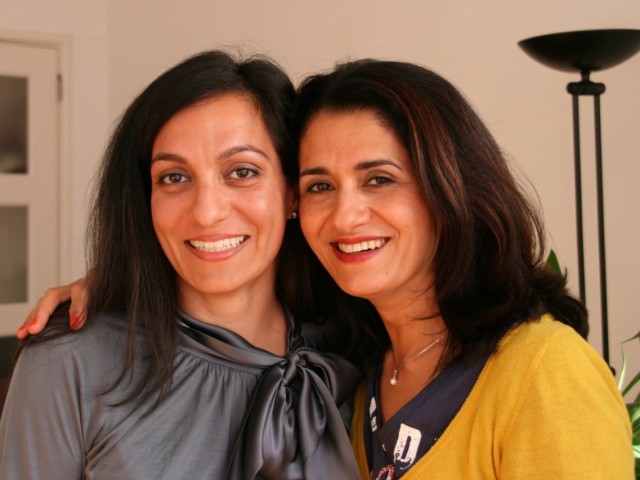
In the summer of 1996, my deliciously beautiful cousin Sohela came from the Netherlands to visit my family and me in Miami. This was a particularly special visit because it was her first time in Miami and my first time meeting her. I had high expectations because I had already bonded fiercely with her older sister, my cousin Sara, who in previous visits had convinced me that Sohela was a witch.

My two cousins, along with my precious mother, became model examples for me because they gave me a context for what it meant to be a modern Iranian woman. Sara and Sohela were beautiful, well-spoken, well-traveled and highly educated. Essentially, my two cousins represented everything my 12-year-old heart wanted to be when I grew up.

Having been born in Miami, and the only Iranian-American girl in my class, I often shied away from my olive skin, thick eyebrows and massive curly hair. I went by my middle name, Leslie, because it was much easier to pronounce than my first name, Saghar. I struggled with where I fit in Miami and more so, how I fit in my own skin. These cross-cultural family visits in Miami let me see the beauty of my heritage and appreciate my place in the broad spectrum of diversity in Miami.

When Sohela arrived, I was on the fence about her and used every outing to judge whether or not I was going to love her as much as I already loved Sara. When we went to swim and suntan at the Venetian Pool, where I first learned to swim, I decided to judge her by whether she could swim from the edge of one side of the pool to the cave on the other side of the pool without getting her sandwich wet. I stared her down in the cave, as we ate our perfectly dry sandwiches.

When we took her for early morning strolls at Fairchild Tropical Botanic Garden, I quizzed her on starfruits, mangos, sabal palms and sausage trees. Would she appreciate the differences in our fruits and the different types of palm trees? At Matheson Hammock Park, I checked to see if she could spot the ridgeback of an alligator that was barely, just barely, skimming the top of the lake. Being the Miami girl that I was, I thought (and often still do) these things were important! One by one, Sohela passed my little Miami tests and with ease started to win me over.

The evening before Sohela left, we took her to South Beach. My parents, brother, Sohela and I all piled into our cream-colored Jeep and drove from our Coral Gables niche to South Beach. I watched her from the back seat taking in the sights from MacArthur Causeway. With the window lowered and her head slightly tilted out, I could see the light in her eyes as she took in the expanse of the port to our right, the beach in front, and the lights from downtown just behind us. More than anything else, I could sense she enjoyed the warm, evening breeze brushing her cheeks. As we inched our way to Ocean Boulevard, I wondered if she could hold her own in South Beach—outlandish, exotic South Beach.

We parked our car and started our stroll on Ocean Boulevard. Across the street, we heard a ruckus coming from the News Café. When we looked, we saw a row of five shirtless guys holding up large, poster score cards. As women would walk or drive by, they would rate them and hoot and holler. My heart was pounding because I wondered if they would rate Sohela and if they did, how she would fare. Holding my dad’s hand, I picked up the pace of our stride hoping that if we shuffled by quickly enough, we would go unnoticed.

What my cousin did next was so classically “Miami” that I fell in love with her forever. Sohela measured her steps and presented herself squarely in front of these men. She stretched her arms out and gave a slight bow. Sohela then slowly pivoted and awaited the reply. We stood beside her, my mom with a sassy smile and I, a bit bewildered. Sohela held court and the score cards revealed:

10! 10! 10! 10! 10!

In that moment, I soaked it all in. I remember the confident “I know!” nod my cousin gave, the rhythm of the beach, and the comforting hue of the evening sky. I started to wonder if, in that moment, there were any other place in the world as perfect as Miami for creating such an experience.

Years later, I still wonder.

My parents, Sam and Esther Leviten, and my brother, Eddie, came to Miami from Chicago, in the summer of 1946, because my father had hay fever.

They moved to the Shenandoah area in the city of Miami. I was born on December 8, 1947. My father worked for different companies, until he bought Atlas Moving & Storage in 1948, and he later started Atlas Rug Cleaners. We moved a few times (it was free) until we bought a house on Southwest 18th Street and 18th Avenue. We stayed there until 1980.

My parents were active in many organizations. One was the American Jewish Congress, where they helped to fight religion in the schools. Our family was active at Beth David Congregation from 1949-59. I rejoined on my own in 1967. Other organizations Dad belonged to were: the Greater Miami Jaycees, the Graybeards, Sertoma International, the Elks Club, Business Exchange and The Movers Association.

He was president of the National Defense Transportation Association when Hurricane Donna came to South Florida in 1960. My parents and I went down to the upper Keys after the storm to find out what kind of transportation was needed to get supplies and food down there. Dad died from Parkinson’s in 2006.

Mom was active in the PTA at Beth David and at my brother’s and my schools: Coral Way Elementary, Shenandoah Junior High, Miami High for Eddie and Gables High for me. She was also active in many diet clubs! Compared to Americans today, she wasn’t that fat! My parents and I were also active in many political campaigns. Mom died from lung cancer in 1970, although she never smoked.

Eddie was active in 322 AZA (B’nai B’rith Organization) during high school, and he was even president one year.

I was active in the chorus at Gables High, even though I was told to lip synch by my best friend! I was better at selling chorus candy and working in the choral library. I tied for the win in candy sales my sophomore year. We enjoyed the state chorus contest in Daytona every year. After I started lip synching, we were rated superior!

Eddie went to the University of Florida and received his bachelor’s degree, and was in Tau Epsilon Phi. I went to University of Cincinnati for 1¼ years and froze. I came back and worked for two years. Then I went to Miami-Dade Junior College and F.A.U. Dade Center (on South Beach).

Eddie moved to New York, got married, had a son and two grandchildren, and owned an electrical supply business. He retired a few years ago. He plays bridge!

I worked at different jobs until I was hired by Dade County. I worked there for 31½ years, until I retired a year and a half ago. Volunteering has been my life, through political campaigns, the feminist movement, my temples, history groups, the LEAD program, and fundraising for breast cancer research. Now I volunteer for the county. Temple Israel is my temple now, because they helped me so much when I had breast cancer.

It was terribly hot that summer 63-plus years ago in New York, and Mom and Dad decided, after years of winter vacations in Florida, that they would move to Miami Beach.

Dad used to talk about how there were no motels then, only motor courts and cabins, all of which had big signs in front that read, “Air-Cooled,” which, of course, meant no A/C!

We arrived in “Myamuh” in August 1946. After a short stay in an apartment somewhere below Fifth Street in Miami Beach, we moved to 8035 Harding Ave.

In the meantime, Dad, an artist and sign painter, signed a lease for a sign shop at 222 Fifth St., which he would occupy until he became ill in 1957.

It was sometime in 1947 when Dad and I would begin a routine that we would repeat every Sunday for three years: We would go downtown to the Mayflower Coffee Shop, at Southeast First Street and Biscayne Boulevard, and I would watch the “donut train.” That is, the raw dough would plop onto the flat cars and make the circuit to become donuts.

Bonnie was our waitress, and after breakfast we would go to the pony track, which was where Jordan Marsh would be built, on the corner of Northeast 15th Street and Biscayne Boulevard.

After I rode the ponies, we would head north for the highlight of the day. We would drive up to Northeast 36th Street and Dad would take us into the Florida East Coast Railway’s Buena Vista Yard, where I would climb on the steam engines and play endlessly.

Nobody chased us away, and it was from those deeply ingrained early experiences that I would go on to become the chronicler of the Florida East Coast Railway’s incredible history as company historian.

Sometime around 1948, we moved to 80th Street on Biscayne Beach. I started at Biscayne Elementary School and a month later we moved to Biscayne Point. We lived at 8035 Cecil St. for 31 years. I have wonderful memories of living there, from playing softball on North Biscayne Point Road to riding our bikes on Cleveland Road and around the Point.

It was a special moment in time. We would go to the Surf or the Normandy theaters on Saturdays to see a double feature, a serial, 10 cartoons and the newsreel plus the adult matinee, all for a quarter!

Following sixth grade at Biscayne, I would move on to Nautilus Junior High. It was during my first year at Nautilus, 1956-57 that I walked into the FEC’s beautiful downtown Miami ticket office in the Ingraham Building and asked for timetables. I’ve been collecting FEC memorabilia for more than 52 years.

I was a swimmer. In September, 1959, our Ida Fisher class moved to the “old” Beach High.

We were blessed to have gone to what was, from the late 1940s through the very early 1970s — with the exception of the Bronx High School of Science — the No. 1 rated academic public high school in America. We had between 88 and 94 percent of Beach High graduates going to college every year.

I graduated from Beach High in June of ’62. With no desire to go to Florida, I went to what I fondly nicknamed “1/2 S U” in Tallahassee. I was out of my element and returned to Miami in December, transferring to the U of Miami and going to work at the Fontainebleau as head teenage counselor.

Several friends told me about a new program that they were starting at (then) Miami-Dade Junior College in hotel-motel and food service management. It was the decision to go to Miami-Dade that would change my life.

With greatly improved grades and a bit of luck, I was accepted at Cornell University in June of ’66, graduating in 1969.

Over the years, I’ve worked at some of the legends among Miami and Miami Beach hotels and nightspots: the Castaways, the Newport, the Playboy Club and others. I met Ike and Tina Turner, The Drifters, Frankie Vallee and so many others who played at the Seven Seas Lounge or the Playboy Club. Being at the clubs was like living a different life, and like the old TV show, The Naked City, everybody had their own, unique, different and sometimes interesting story.

The Miami years have been extraordinarily good to me. Since 2004 I have written and had published 15 books.

Indeed, that nonsense about “Will the last American leaving Miami be sure to bring the flag” is, as stated, pure, unadulterated nonsense.

The flag ain’t leaving — and neither am I!

I became enamored with Miami in my early teens. Hearing that it was the “in” place to vacation and, as a 15 year old, wanting desperately to be “in,” I persuaded my parents to take our family on a much-needed vacation, at least according to me.

My mom, dad, two younger sisters and my roly-poly grandma (known as Bubs) all left for our vacation in our ‘50s Chevy sedan, driving from Michigan to Miami Beach for the Christmas holidays. Daddy knew everything, or so he said, and of course we didn’t need any hotel reservations. We’d just “play it by ear.”

After three and a half days of a grueling drive (no freeways then), we arrived in Miami and spent an entire day going from hotel to hotel, stuffed like sardines in a hot car (no air conditioning, either), with my baby sister crying all the way. In spite of a frantic start, our stay was heavenly: the weather, the palm trees and the Miami colors, all eye candy to me, a Midwestern teen-ager.

A few years later, I visited Miami Beach for the second time, this time accompanied by my handsome husband, both of us in our late teens. We honeymooned at the Nautilus Hotel and, upon checking in, were given the Presidential Suite. The hotel was oversold and wanted to make amends because our requested room, the least expensive in the hotel, was not available. Being young, inexperienced “adults,” we demanded our tiny room, frightened that the hotel would make us pay for the upgrade. The management agreed and gave another couple the thrill of a lifetime.

While at the Nautilus (referred to in the Midwest as “Honeymoon Heaven”) we made lifelong friends, saw the stars: Carmen Cavallaro and his orchestra at the Fontainebleau Hotel and also the very funny “Professor” Irwin Corey; ate stuffed cabbage at Wolfie’s and had fun in the sun, me wearing what became known as the “Siren” swimsuit by day and my “merry widow” corset and plastic Spring-o-Lator shoes in the evening.

Some years and four babies later, we visited Miami for our third time with our very young children. The occasion was the American Trial Lawyers convention. We stayed at the Beau Rivage in Bal Harbour, headquarters for lawyers with families.

The convention was nearby at the Americana and featured superstar lawyers . One evening we joined other lawyers and their wives (female attorneys were a scarcity in those days) at our first taste of Little Havana.

Years later, Barbara Capitman invited me to speak to her Art Deco Preservation League, comparing Deco architecture to the fashions of the period, which by this time had become a subject of my expertise. When my husband joined me later that week, Capitman’s son and his business associates talked us into investing in some of the original Deco hotels, such as the Cardozo and the Leslie. We saw my favorite side of Miami, the Deco district, and later partied with Eartha Kitt at the Hotel Victor. I took lots of pictures in the nearby Amsterdam Palace, later to become Casa Casuarina, home of my good friend, the late designer Gianni Versace. We held our “hotel” meetings at “The Pink House,” where the TV show “Miami Vice,” starring Don Johnson, was being filmed.

Yes, Miami Beach was in our blood and, after staying at various places on the beach, we bought our present home near the Fontainebleau and Eden Roc hotels – almost 30 years ago. Getting away from the Midwestern winters with frigid temperatures and snow, spending Sundays on Lincoln Road, early December at Art Basel Miami, and midwinter antique shows have added to my fun times.

The boardwalk and the clay courts have been a big draw to my tennis playing, jogging husband. The wide choice of restaurants with their famous and soon-to-be-famous chefs have also added another element of good times/good eats (and good diets) over the years…but the broadening culture base in the area, with its Design District, Arsht Center, Bass Museum of Art, the stunning and educational Wolfsonian and, of course, the gorgeous New World Center, designed by Frank Gehry, together with the always heavenly Books & Books, have given us more than just “fun in the sun.” Miami has given us a home away from home, and then some.

My memories of Miami begin 34 years ago in 1980 when I came here for the first time for a nursing internship at Cedars of Lebanon Hospital. I had completed three years of nursing school at the University of Pittsburgh and came to Miami with a classmate for the summer. We lived in what was called the Cedar’s North Tower in the Civic Center. There were other nursing students from all over the country and we bonded very well. Of course, Cedars hoped to recruit us after graduation as there was a nursing shortage at that time. Our first weekend in Miami unfortunately was interrupted by the McDuffie riots. We all called our parents to reassure them that we were safe in spite of having swat team officers on the roof of our building as we watched parts of the city on fire.

I met my future mother-in-law during my first week on the job. She was a nurse at Cedars and upon meeting me she replied, “Have I got a son for you!” Our first date was to see the movie “Dressed to Kill” with Angie Dickenson and Michael Caine at the Omni theatre. By the second date, it was true love.

At the end of the summer, I returned to Pitt to complete my final two semesters of my nursing degree before moving permanently to Miami after graduation. I took my nursing boards at the Miami Expo on Milam Dairy Road and began working at Cedars. I lived again temporarily in the Cedars North Tower where my husband proposed to me on the rooftop overlooking my new city. We were married in November of 1981 and we bought our first townhouse in West Kendall when the home loan interest rates were greater than 15%.

My husband grew up near 8th Street and 71st Avenue and so he introduced me to Gold Star Deli, Sarrusi’s, Pumpernik’s, Arbetter’s and the Blue Grotto. We explored the Keys, Marco Island, and his family’s favorite destination: Sanibel Island. We bowled at Bird Bowl on a league, and shrimped off the bridges of the Rickenbacker Causeway.

We had two daughters who spent lots of time at the new Dave and Mary Alper Jewish Community Center in after-school care and summer camp. My husband and I took ballroom dancing and salsa classes at Miami-Dade College in Kendall. We picked strawberries and tomatoes in a field where Town and Country is now. Some of our favorite family activities included strawberry milkshakes at Burr’s when visiting Monkey Jungle, nighttime bike trips at Shark Valley when there was a full moon, kayaking at nine-mile pond in Everglades National Park, snorkeling at Pennekamp Park, and swimming at Venetian Pool.

In August of 1992, we were on vacation with our children in West Virginia when Hurricane Andrew struck. We had people check on our home and found out it was uninhabitable. My daughters and I stayed up north for another week and when the airport opened my husband flew back to Miami with a brand-new chain saw as his carry on. How times have changed. He knew what a useful commodity it would be with all the downed trees reported to us by the neighbors. As he drove from the airport to survey the damage, he found it difficult to find the house without the usual landmarks. Luckily our neighbors were willing to take us all in until our house was ready to move back into in mid December.

During the next several years we got the house and yard back into shape. My husband, who has a degree in horticulture, restored our yard with lots of fruit trees including grapefruit, orange, lemon, lime, and tangelo trees and other native plants. However, in 1999, a citrus canker outbreak occurred putting all of the state’s citrus trees at risk and so an eradication program was enacted. One day after work we came home to find all of our beloved citrus trees cut down and in the swale of our house. After a few days of moping, we decided to make the most of our now barren yard by putting in a swimming pool. This was the best investment for our family because we have spent many hours of quality time together trying to stay cool during the hot summer months.

I feel so fortunate to have had the experience of living in this multi-cultural city where I learned to love churros and hot chocolate, pan con lechón, chicharrones, and becoming bilingual while working in an ambulatory center on Calle Ocho. My husband and I have a pool surrounded by mamey, lychee, dragon fruit, mangoes, atemoya and papaya. We continue to find new activities in Miami to enjoy, for example the South Dade Cultural Center, Cosford Cinema, the Tower Theater with Azucar ice cream across the street, O Cinema, and Schnebly winery where our daughter was married. I love living here in Miami and am so grateful to my mother-in-law for giving me a reason to come back permanently.

It is unfortunate that nostalgia comes later in life. Having it when memories are fresh might make one more appreciative of what is being lived. I speak of this because of a recent incident that sparked my memories of growing up in the late 1950s through the 1960s in Dade County, on a street just a little north of Perrine and just a little south of South Miami.

My street was an unpaved cul-de-sac that began at U.S. 1 and ran for a couple of blocks. Across the street from my house was a Florida pine forest, though it did not match the forest I would read about in the books I was given in Perrine Elementary school. In those books, leaves fell in the fall and everyone in town would bury potatoes to be roasted with the leaves as they were burned. It sounded like fun to me and it was hard for me to understand why I was not experiencing it in Miami.

The books mentioned snow as well. The good teachers at my school helped give all of us students an idea of what snow was like by having us cut snowflakes out of paper. It was only much later in life that I discovered that our paper models and the real thing in no way matched.

My yard was enormous, or so I remember. It was filled with monarch butterflies, dragon flies, and frogs. Once a year, our yard, the woods, and almost all side streets filled with land crabs. On Old Cutler Road it was not odd to see people collecting them nor was it was unusual see cars with flats caused by them.

The house I lived in was small but made slightly bigger by my father who was very skilled with his hands — something I apparently did not inherit.

A bit north on U.S. 1 there was the Dixie drive-in movie theater, a popular hangout for high school students. Somewhere not far from there was the Miami Serpentarium, a local tourist landmark that was marked by a giant snake statute.

And then there was Harry.

Harry Troeger lived in a small home a few houses down from mine. He designed and built the house. It had no electricity. I suspect he had a well but I do not know for certain. He seemed like a strange man who lived in the small wood and coral house he built. It was almost hidden by trees. For me, my sisters and the other children who lived on the street or the next street over, he was a mystery.

Once a year on Halloween, most of us were brave enough to approach the small house and peek in the windows. We ran like the blazes when we heard a noise. We all assumed the house was haunted.

Harry Troeger, who died in 2008 at the age of 92, was Miami’s Henry Thoreau: a unique man who lived an unusually solitary life in what was, back then, the sticks. Harry was a pioneer.

As a small child I was too timid to say little more than hi when he walked by, heading (I was told) to his job at a movie theater.

Recently, I read in the Miami Herald that his house had been sold to a contractor because of unpaid taxes. The taxes had lapsed in large part because the county was forwarding the bill to an old out-of-date address where Harry lived in the late 1940s.

The article indicated that the house was in danger of being torn down. There was hope, however: it came in the form of a small band of merry Don Quixote types led by Amy Creekmur. The “Friends of Harry” (aka the FOH) were scrambling to make an offer to purchase and save the property.

The lady’s name was familiar. By chance, several weeks earlier, out of curiosity, I checked county records to see who was recorded as the owner of my childhood home. Amy Creekmur had purchased the house I grew up in.

But neither Amy nor the troops that made up FOH were able to move fast enough to save Harry Troeger’s house. His house was brought down. The coral stones he had used for the construction were moved. The wood discarded. A unique part of our local history lost.

It is not reasonable or expected that every old house or historic building be saved. And it is understood that there are many who would save none. To them, the properties are old buildings with no value.

But I believe most of us seek to save some links from our past. Harry Troeger’s house once had historical designation but the agency that granted the status took it away. For me, it is hard to believe that there was a more worthy candidate for continued preservation. Harry Troeger’s house was one of our most vivid links to our past.

I can close my eyes and relive how Dade County was years ago. Sadly losing Harry Troeger’s house takes that ability away from others.

Addendum from the Miami Herald

Troeger built the cabin, which was loosely divided into a wash room, bedroom and reading room, by hand out of coral rock and Dade County pine in 1949. Troeger, who made the cabin his home for nearly 60 years, lived a simple life: no electricity, no car, no running water, only a pump he built himself. The cabin walls were lined with books about Buddhism and works by Emerson.

In 1998, the county deemed the home “unsafe” and threatened to tear it down. When friends and neighbors rallied, the county designated the home as historic and Troeger was allowed to live out his life in his home. In 2008, he died in his bed at age 92.

The U.S. Coast Guard does more than search for rafts, drugs, and errant boaters in this area. “Coasties” saved 70 merchant mariners during a blizzard off Massachusetts in 1952. It was called the “two-tanker disaster,” and this Miamian was aboard one of the Coast Guard vessels involved in the rescue of two storm-savaged ships.

I grew up on Miami Beach, and always admired those sleek Coast Guard cutters that were moored off Biscayne Bay’s islands. Who would have dreamed that some day I would be a seaman aboard a cutter involved in the T2 tanker rescue? It is still listed as one of the Coast Guard’s 10 most significant rescues.

During my summer vacations from the University of Florida, I bell-hopped at the Sands, Royal Palm, and White House hotels. My favorite bartender worked at the White House — my dad, Philip Morris. The oceanfront lounge had the greatest view of any beach hospitality venue.

Who would have known that I would meet my future wife in the nearby Club Deuce? Diane drove down from Detroit to get away from another cold, slushy Michigan spring. Two gal friends introduced her to the Deuce, now the oldest bar in Miami.

A fairly new CG cutter is moored at Port Miami. This 154-foot fast-response cutter is named the Bernard C. Webber, after a true American hero. Bernie rescued 32 stricken mariners from the tanker which had cracked in half from the fury of this unnamed storm a few miles east of Chatham, Massachusetts.

Bernie was the coxswain (skipper) of a motor lifeboat, out of Chatham
Light Station. It was 36 feet long, and had a capacity of 12 people, including a crew of three.

During the blizzard, and despite 50-foot waves, Bernie managed to cram 32 merchant seamen into his windshield-smashed boat. A 350 lb. sailor didn’t make it as he leaped from the S.S. Pendleton stern.

Cutters are named after enlisted heroes. Bernie denied that he was a hero all his life. He refused the CG gold lifesaving medal, unless his crew of three received gold also, instead of silver.

A sister ship, S.S. Fort Mercer also cracked in half, just forty miles away from the S.S. Pendleton. I was a deck-hand aboard the CGC Acushnet, which rescued 17 sailors off the foundering Mercer stern.

After a night of plowing through 60-foot seas, the CGC Acushnet arrived at the S.S. Fort Mercer’s stern section, just south of Nantucket Island. The icebreaker Eastwind was attempting to rescue three panicked sailors by pulling them over to safety in rubber rafts. One survivor had nearly drowned in the process.

Finally, our captain, John M. Joseph, had seen enough. He got permission to drift alongside the stern and convince the survivors to leap to our fantail. Capt. Joseph maneuvered the Acushnet parallel to the stern, and when we were close enough, three feet, seven distressed sailors leaped to our waiting arms. Then, rogue swells suddenly
swept us together and the vessels collided at taffrail height. CLUNK, KNEEL, HUG THE DECK!

We made a full circle and returned to rescue 11 more mariners from the tottering hulk. One hefty mariner slipped on our railing, but was snatched from the freezing water by our two bosun mates. [The word is boatswain, but the common term uses the pronunciation and spelling “bosun,” so I’ll let the Herald folks make that determination.] He explained that he wore his new shoes to make the leap. Another mariner landed on our fantail wearing two suits and two overcoats. In the chaos, he had neglected to grab a shirt.

I was third in the catch-and-hold rescue line, and was escorting a successful jumper to the pharmacist mate’s cubbyhole for his shot of brandy. “Hey, Doc!” I yelled. “How about me? I’m just as wet and cold as he is.” Doc replied, “Get this guy a shirt, and we’ll think about it.” He didn’t and neither did I, with my innards doing flip-flops.

Another merchant seaman told me, “That was the greatest demonstration of seamanship I have ever seen. It was also the worst storm I have been through in 20 years at sea.” Dented, but not beaten, or cracked, the “Mighty A” then headed northwest to drop the survivors at the Boston base.

Tally of the tragedy: 14 lost at sea, 57 rescued from foundering vessels.

To me, it was the most harrowing and exciting three days of my life.

Decades later, the CGC Acushnet was stationed in Miami. She was one of 24 cutters which helped ferry 125,000 downtrodden refugees from Cuba to Florida in the Mariel Boat Lift. In case you forgot, that historical event occurred from April to October of 1980. In three years, I got to see a panorama of America: Portland, Maine; Boston; Baltimore; San Juan; Guantanamo; and finally, the 180-foot buoy-tender CGC Bramble, in Miami Beach. This was before the Coast Guard base was built on Watson Island, so we were moored alongside Alton Road, just south of Fifth Street.

Glad to be back in Miami, but it took me months before I would go fishing with friends in their tiny 24-foot skiff.

I was born in Louisville, Kentucky in January 1944, what you would call a war baby.

My mother and father were both born in Louisville and attended school in Louisville. They met at the old Anchorage High School and were married in 1941.

My father became a pilot in the Army Air Force in late 1942 and was serving in England late 1943 and early 1944. His plane was shot down over Germany on April 1, 1944 and none of the crew made it through the crash and burn.

My mother bought a car and a trailer from my grandfather, a Chevrolet dealer, and then headed south. Mother, my grandmother, and I made it to Tampa, Florida, after driving through Alabama in the dead of winter.

She was told one of the best parks was on the east coast at Briny Breezes, and after checking out the park, she decided to take us and the trailer there. Just outside of the park was the Jungle Inn Bar, a favorite hangout for singles in those days. My stepfather, his brother, and uncle were working on construction of new homes in the Boynton-Delray Beach area. My mother, a lonely war widow, and my stepfather, lonely war vet, met each other at the Jungle Inn and six weeks later wedding bells were ringing at the Lutheran Church in Delray.

They lived in the park for about six months after this and ended up renting a home in downtown Boynton Beach. Within a year, they purchased a home in Delray Beach and moved just before the 1947 hurricane. They constructed a small, two-bedroom cottage on the rear of this property and would rent out the house to winter visitors and live in the cottage.

My stepfather remained in the construction business until 1957 when he suffered several strokes on Easter Sunday, ending his home construction business. At one point, he worked with an investor, constructing several homes in Boynton Beach. My father had to make many trips to Miami to see the investor while the development of this street was taking place.

Over the years, we made many trips to Miami to attend some of the attractions such as the zoo and the Jungle Gardens. After my father’s strokes, he went to work for a company in Boca Raton that did business all over the United States.

They would have an annual picnic at Crandon Park in Miami. Several times when my parents had to fly out of town for a special vacation, they would leave from the old Miami International Airport.

I attended school at Delray Lutheran Elementary School, then, I was part of the first sixth grade class at Plumrose Elementary School in Delray, Boynton Beach Junior High, Seacrest High School, and, I finished high school at Kentucky Military Institute in Lyndon, Kentucky, which had winter headquarters in Venice, Florida. I finished school at Palm Beach Junior College in Lake Worth.

My wife and I met at the First Baptist Church in Delray Beach Florida, and in 1965 were married at First Baptist. We left Boynton in September, 1965, and moved to Louisville unfortunately, our moving van did not make it that far.

Somehow it went off a mountain in Tennessee and that was the last we saw of most of our possessions and wedding gifts. We had moved to Louisville, because I was going to work for my father’s family business. The Eline Realty Company has been in business, either selling homes, building homes, or selling Chevrolets, since 1913.

I will always have a fondness in my heart for South Florida and the twenty years I spent growing up there. My wife and I still enjoy coming to the Panhandle every spring for rest and relaxation. The place we go to has only one fast-food restaurant in the whole county.

The east coast has gotten somewhat overcrowded with people, roads, and buildings the last 30 years, but that is progress.

Translate »